
Planning Your School's Next Event?
On Oct. 5, 2018, the big day for Hartwick College’s nursing program arrived: its first-ever Nursing Symposium, which marked the program’s 75th anniversary. For the event, the Oneonta, New York, college unfurled a giant banner above its main building, visible from almost all points on campus.
From her office window, lead symposium planner Beth Steele saw students and alumni starting to gather under the banner, and she thought, “It’s showtime!”
And from that moment, the magic of a campus special event unfolds.
Events—be they commencement, campaign kickoffs, presidential inaugurations, family-friendly picnics—are opportunities to energize a campus community. Many are time-honored—graduation ceremonies date back to the 12th century in Europe—while others, like hackathons or networking events at local breweries, are shaped by how students and alumni connect today. Regardless of form, a special event is an opportunity to create a powerful shared experience rooted in your institution’s values.
And there’s no greater stage for that than a milestone anniversary event, like Hartwick’s nursing program commemoration. Milestone anniversaries are unique occasions for a college, university, or school to celebrate the past and lay the groundwork for the future.
“An anniversary is a galvanizing engagement moment for an institution,” says Sarah Winkler, co-founder and managing principal at the firm Educe, whose principals have 25 years of experience in event strategy.
Milestone events are different from other special events because they bring together stakeholders from across an institution—alumni relations, development, leadership, student affairs—to share a common story, she says. Whether it’s a 10-, 100-, or 200-year anniversary, milestones give institutions a spotlight to showcase what makes them unique, ramping up pride, enthusiasm, and commitment.
But, as any event professional will attest, big events—especially yearlong celebrations, series of events, or lavish galas—can be challenging to execute. Anniversary events can be time-intensive, draining for your staff and volunteers, and expensive.
“One of the biggest challenges is that folks try to do so much,” says Winkler. “Then it just becomes completely overwhelming, beyond the bandwidth, potentially beyond budget. There can be a lot of planning fatigue.”
There’s no shortage of events that an institution could undertake for an anniversary—but what should a team focus on to create a celebration that’s meaningful but still manageable?
Sparkle, at Scale
Anniversary celebrations can dazzle at any budget. Scaling ideas to work at any institution, with any size staff, is a dance between dreaming big and drilling down to what’s doable.
In the celebration planning process, scaling involves three key guiding principles.
- Define the goals.
Find your “why.” What are your institution’s strategic goals for this anniversary? Is it important to highlight certain elements of your history or showcase notable alumni? Are you linking the anniversary to a campaign? Think about which audiences (students, alumni, donors, staff) you’d like to bring into the fold, suggests Winkler. - Leverage existing events.
Consider where you are already planning to engage your audiences. “Where are they already gathering? Is it reunions? Is it homecoming?” says Winkler. “The resources, both bandwidth and financial, are already allocated to those events. Think about how you can shape those just a little bit differently to celebrate.” - Be authentic.
A great celebration, regardless of size, needs to be authentic to the institution. What will resonate with your audience? “What will really capture the culture and the spirit of the institution?” says Winkler.
Along with these questions, designing a celebration to scale involves acknowledging your particular institution’s or team’s constraints: time, staff capacity, budget, space, faculty or leadership buy-in. Finding creative solutions to these is part of the planning.
Guided by these three concepts, institutions around the globe can design milestone events that work within their budgets and staff capabilities. Take a peek behind the curtain for a behind-the-scenes look at how three institutions designed different celebrations for major anniversaries—each built to meet particular goals, capitalize on existing events, and resonate within each school’s unique context.
The Dinner That Dazzled
The University of California Santa Cruz
50th Anniversary, 2015
Institution type: Public state university
Enrollment: 18,765
Celebration type: Year of events with a signature Founders Celebration dinner
Planning time: Three years
Planning teams: Coordinating committee, alumni committee, community committee
Budget: $1.6 million, much of which went toward a simultaneous marketing push. $600,000 for dinner.
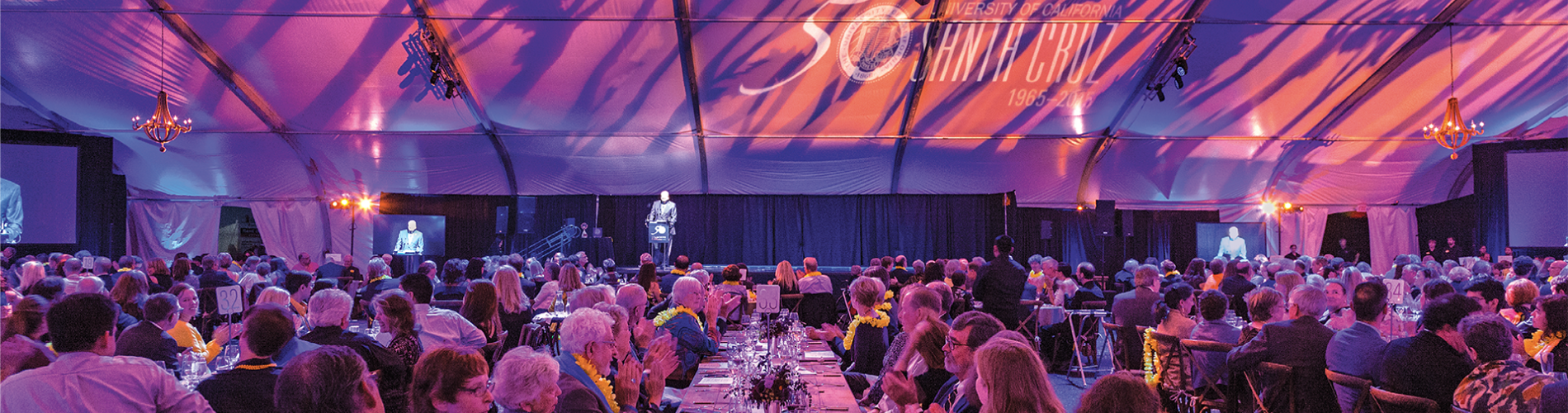
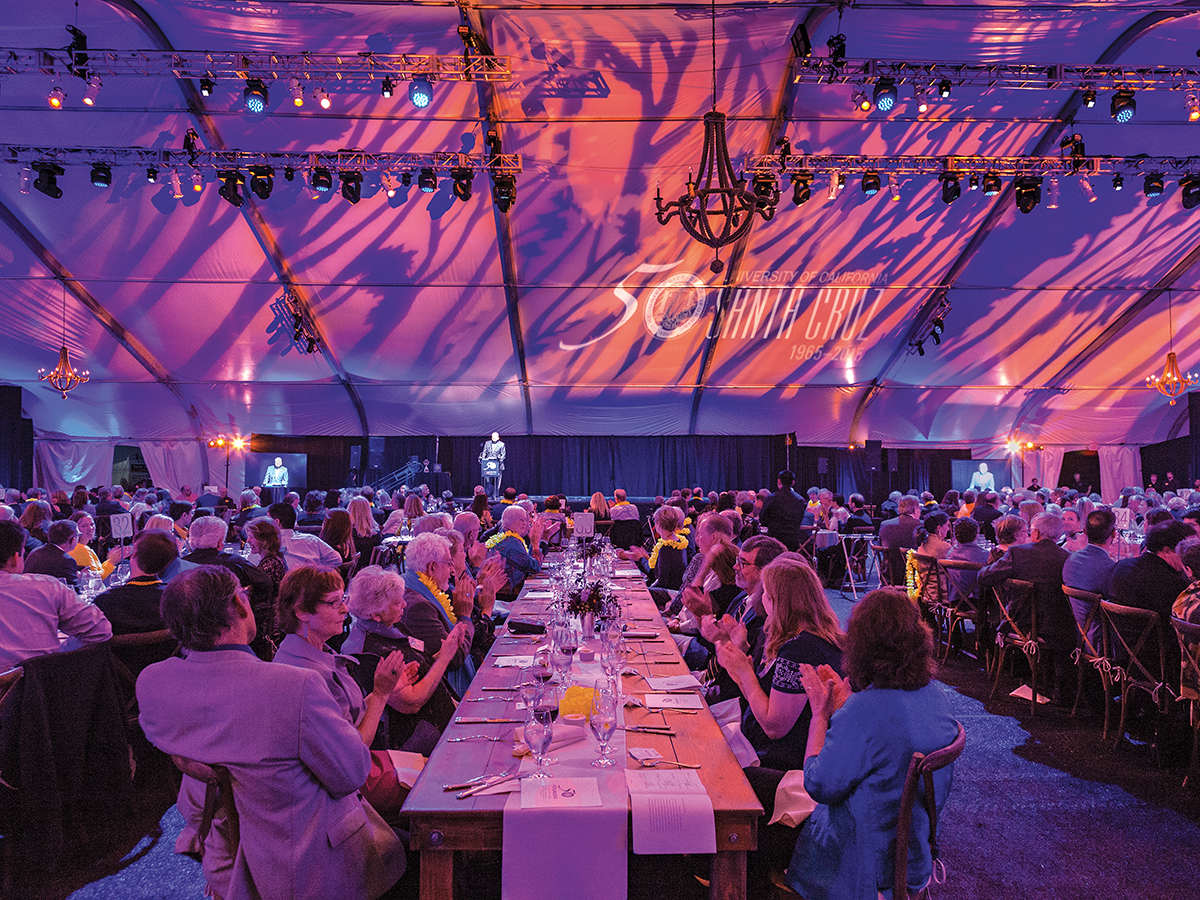
On Sept. 26, 2015, 700 alumni, donors, and friends of UC Santa Cruz gathered under a tent for an al fresco dinner designed by famed chef Alice Waters. There, as a perfect pink-purple sunset unfolded over Monterey Bay, the California university celebrated the culmination of its yearlong 50th anniversary festivities.
“It was amazing. I’ve had comments [from alumni] that they didn’t think UC Santa Cruz could pull something like that off,” says Howard Heevner, assistant vice chancellor of university development programs. “We don’t actually have sit-down dinner space for more than 400 here. For us to take on something as enormous as this—for our community, that’s one of a kind.”
As Heevner likes to say, UC Santa Cruz could have rolled out a cake with sparklers and celebrated the 50th with that. Instead, its planning committees wanted to strategically leverage the anniversary to achieve four goals: reflect on the idealism of the university’s founding, explore its future, connect with notable alumni, and foster a culture of giving.
“In planning something like this, there are a lot of ideas. We really tried to filter them all through our goals,” says Heevner. “What is the broadest impact we can have, and how can we make this as budget-neutral as we can?”
To do that, Heevner held brown-bag sessions with 40 teams across campus to brainstorm activities and outcomes; it was critical, he said, to foster inclusion and campus ownership. The planning committees amped up existing events for the anniversary (like its spring alumni weekend, which offered a slate of events from DNA Day to TED Talks and more) and added some new happenings, like a Pioneer Reunion for UC Santa Cruz’s first graduating class.
Key Tips:
- Brainstorm with stakeholders across campus.
- Amp up existing events.
The team made the decision to invest more in its Founders Celebration dinner to give alumni an unprecedented, memorable experience. Team members moved the dinner outside, brought in celebrity chef Waters, and added Cirque du Soleil-style performances. Staff members kept plans doable by turning down ideas they thought wouldn’t have broad impact, such as a StoryCorps-esque project. (That became a post-anniversary activity instead.)
“Celebrating these things doesn’t mean you have to do something brand new,” says Heevner. “Let all the ideas come out. Then start to edit: What is celebratory and inspiring, but also what is manageable and realistic based on your resources?”
The Professional Symposium That Inspired
Hartwick College
75th Nursing Anniversary, 2018
Institution type: Department within a small, private liberal arts college
Enrollment: 1,100
Celebration type: Daylong academic symposium
Planning time: Four months
Planning team: Core team of three, with guidance from the college president
Budget: $7,443.50
To honor its past, Hartwick College’s nursing program took a bold look into the future.
Started as a Cadet Nurse Corps initiative during World War II, Hartwick’s nursing program is the most popular major at this small New York college. To celebrate its journey, Hartwick held a nursing symposium in October 2018.
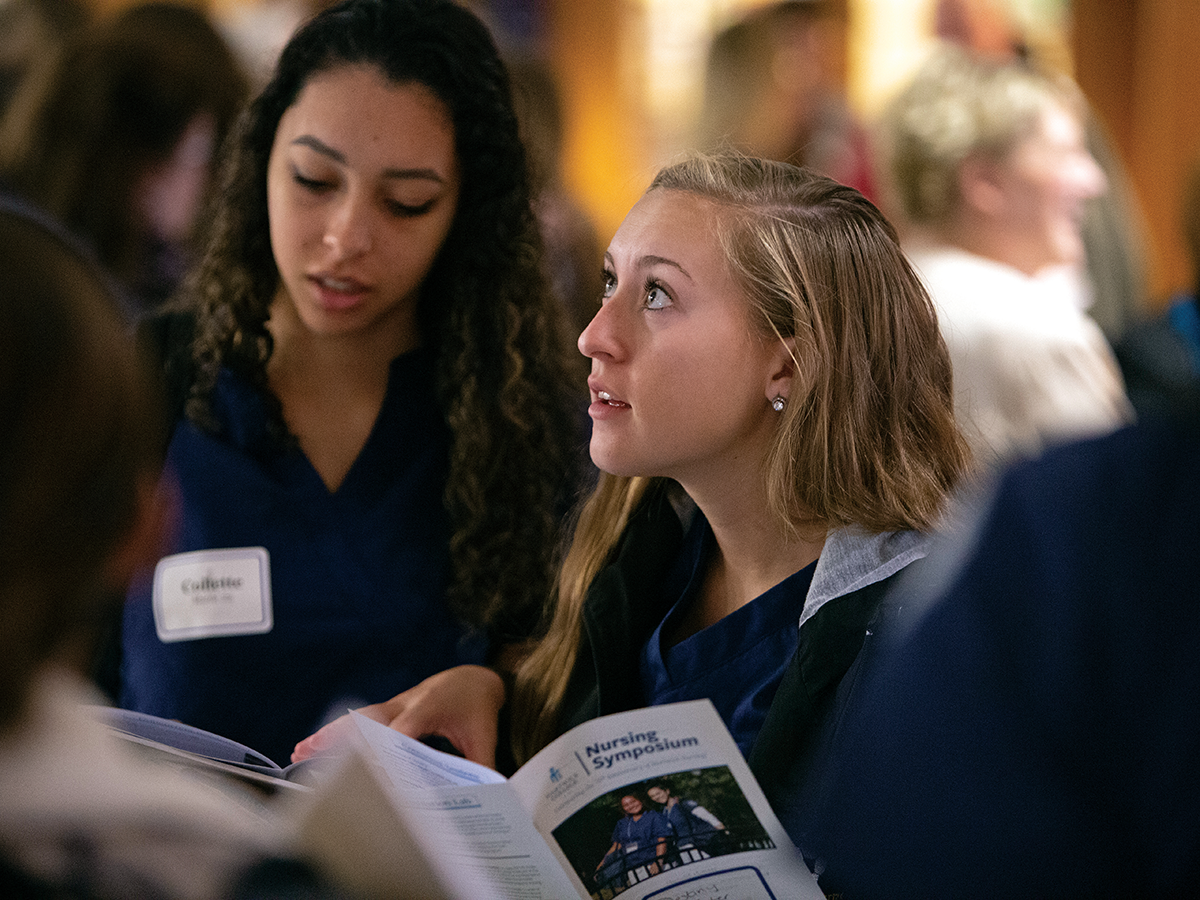
The event brought students, alumni, faculty, and health care leaders—many of them alumnae—together to examine critical issues identified by Hartwick’s nursing department chair: wellness, geriatrics, pediatric mental health, and innovation. The day wrapped up with a ribbon-cutting ceremony and tours of the college’s state-of-the-art nursing simulation facility.
Beth Steele, director of advancement communications, led planning for the event. During it, she saw students sitting on the edges of their seats, eager to ask questions.
“Our nursing program is very rigorous and our college is an engaged community,” says Steele. “This symposium brought them together across generations and highlighted their pride in Hartwick, in each other, and in themselves.”
The small planning committee had two goals for the symposium: to demonstrate pride in the program and to position Hartwick voices as leaders. Hartwick had never undertaken a major academic symposium, so the team had plenty of challenges to think through.
“I had to keep going back to make sure we could do it all,” Steele says, noting that the team scaled back from six sessions to four and that all speakers were unpaid volunteers. “My mantra was to make sure whatever we did, we did it really well.”
The planning timeline was short—probably too short, says Steele. Strong partnerships made the celebration come together smoothly. For instance, Steele asked Hartwick’s planned giving director to help recruit alumni speakers for sessions. Students and faculty from the college’s museum studies program worked with Hartwick’s archivist to create a history exhibit.
Key Tip:
- Get creative with your partnerships: alumni, staff, and community.
“When you’re forging a new path, bring in people who say yes,” says Steele. “We had big ambitions and not a lot of time, so we needed a core group that was committed to the idea and could run with things.”
The day’s most ambitious session was the brainchild of Hartwick President Margaret Drugovich: a panel of three regional hospital CEOs who explored health care’s future. That discussion, says Steele, underlined how professional partnerships are key to Hartwick’s educational strength.
“An event [such as this] is an opportunity to position your institution in its own eyes and in the eyes of external stakeholders,” she says. “That takes it to the next level.”
The Weekend That Delighted
American School of Paris
Homecoming and Community Celebration, 2018
Institution type: K–12 international school
Enrollment: 800
Celebration type: Weekend with a campus dedication, International Day picnic, and gala
Planning time: Two years
Planning team: Steering committee
Budget: €180,000, or about US$200,000
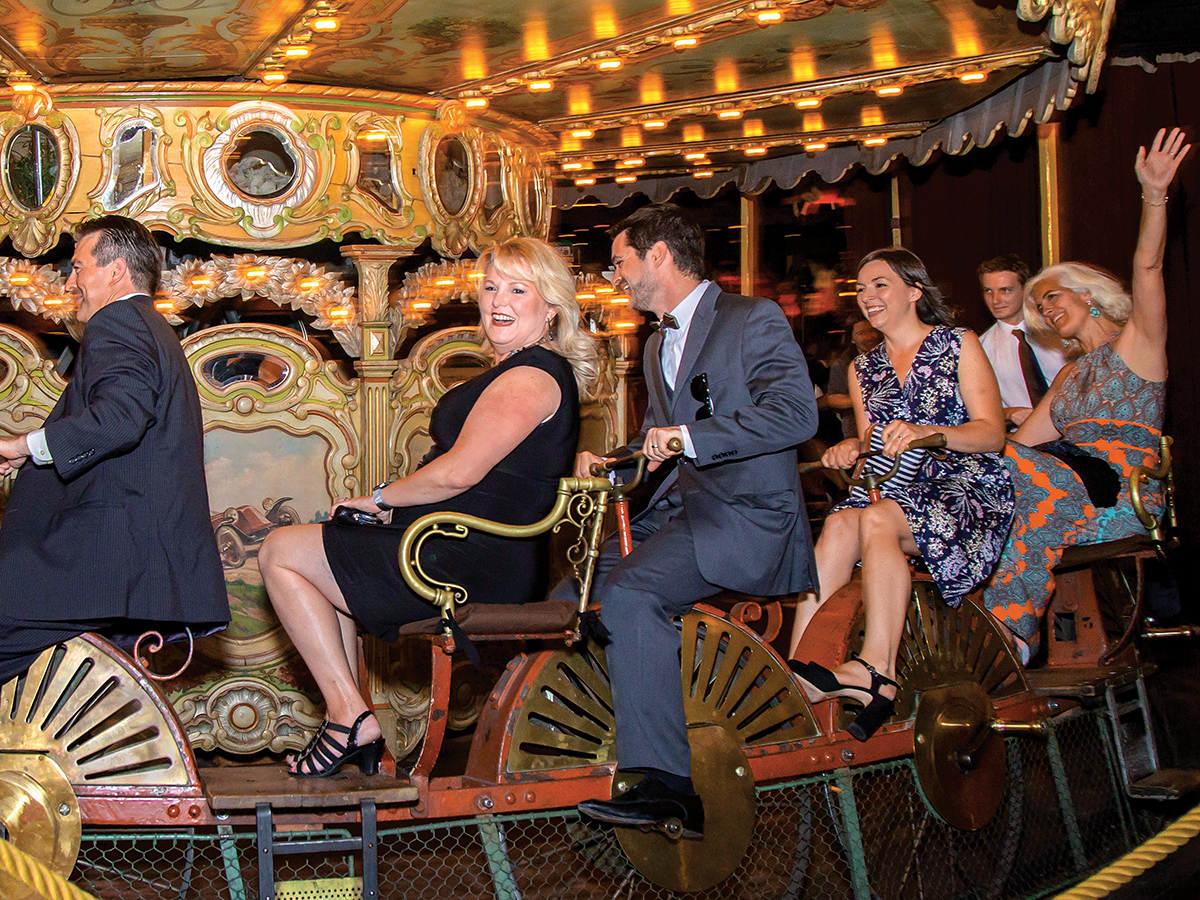
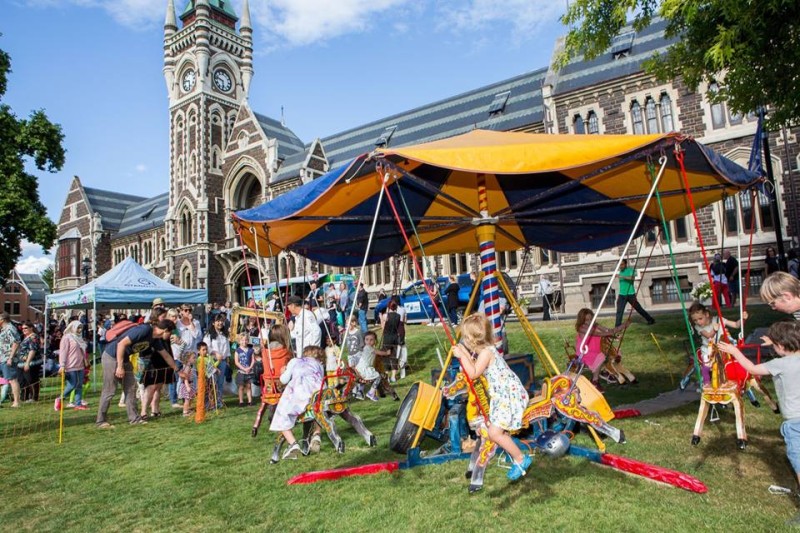
At the Musée des Arts Forains—the Fairground Art Museum—visitors can take a spin on an 1897 carousel, play carnival games, and revel in a slice of the City of Lights’ history.
It was just the right space for the American School of Paris to cap off a homecoming celebration to honor its past, present, and future: the 50-year anniversary of the opening of its current campus and the dedication of new buildings, including an innovation center.
“It was a magical evening in a special place. It brought out playfulness and joy, and celebrated all that is ASP,” says Emily Robin, the school’s director of advancement.
Two years before, ASP formed a steering committee of faculty, staff, board members, alumni, and parents to plan the 2018 celebration, articulating clear goals from the outset:
- Celebrate ASP’s history and diverse community
- Dedicate the new campus
- Reconnect with alumni
- Say merci beaucoup to donors
- Cultivate giving
To craft a manageable, meaningful celebration, the committee identified celebration “must-haves” and aligned goals and resources, says Robin.
“We did lots of homework to examine various options, from the grandiose and worthy of Versailles to the simple bring-your-own picnic,” she says. “We had evidence for what could be possible and what additional resources would be required to do more.”
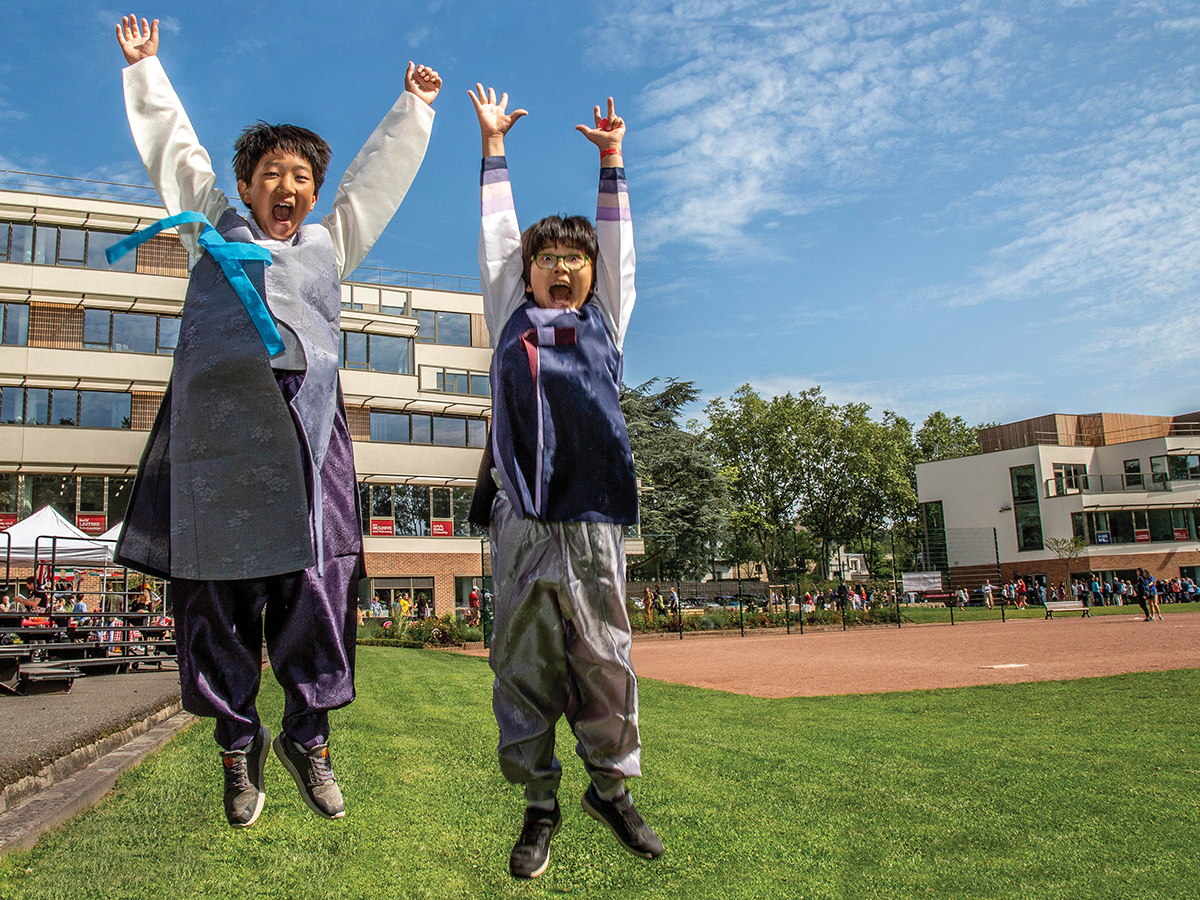
The weekend’s events honored ASP both now and then, with a look to the future as well. The school welcomed alumni with a reception at the current campus and offered tours later in the weekend of the old du Barry campus. Saturday morning, the school held a dedication ceremony for the new buildings; 1,500 participants joined the fun. Students helped create a history exhibit and lined up in traditional dress for an International Day picnic to honor ASP’s diverse community.
Key Tips:
- Honor past and present.
- Define your "must-haves."
The Saturday night La Soirée gala gave donors, alumni, parents, and friends the opportunity to dance, connect with one another, and raise a glass to ASP’s future. The team offset €100,000 (about US$114,000) of the costs of the weekend with ticket and school merchandise sales, along with a number of charitable gifts.
“A major highlight for me was seeing generations of ASP families come together to celebrate the impact that their ASP experience had on them,” says Robin. “From the youngest students to our most senior alumni, all who came back for homecoming spoke of their time at ASP and in Paris as formative in their life story.”
The fête also energized donors and has boosted giving; many gifts have come from first-time donors, adds Robin.
The Essentials of Any Great Celebration
Four years later, alumni still talk about UC Santa Cruz’s sunset Founders Celebration dinner, Heevner says. That’s the sort of energizing “wow moment” that an anniversary event can deliver to your campus community: a unique experience that celebrates your people, place, values, and history.
But great events offer pizazz with purpose. To dream big, teams have to plan smart, set strategic goals, and leverage their institution’s strengths and resources. Though milestone celebrations come in all shapes and sizes, all successful ones have these key factors in common:
- A big idea.
Effective anniversary celebrations are guided by clear goals tied to the institution’s mission. - Leadership buy-in.
This is crucial, says Hartwick’s Steele. Hartwick’s president was a key champion of the nursing anniversary from the beginning. “As we moved through the planning, she was an invaluable sounding board for ideas, a problem-solver when we felt unsure, and an overall source of moral and financial support,” she says. - Staff and faculty involvement.
Great celebrations include staff and faculty early in the planning. Teams can conduct a “listening tour,” as Heevner did at UC Santa Cruz, to nurture ownership from staff and consider which faculty members can lend their talents and ideas. - A committed planning team.
Smaller might be better. The group should be nimble enough to be able to contribute consistently, says Educe’s Winkler. Prudent planning teams solicit plenty of input—but rely on a core, results-oriented group to execute. - Plenty of planning time… but not too much.
Well-done celebrations require ample planning time. The bigger the celebration, the more preparation time that’s needed—but beware: Beyond three years, fatigue can set in. - Creative partnerships with alumni.
An anniversary is the time to showcase the talent of alumni and potentially leverage their strengths. Call that alumnus who owns a vineyard or the alumna with a calligraphy business, advises Winkler. - A balance of events.
Milestone events have to appeal to an institution’s broadest audience, so successful celebrations offer a balance of activities and projects, clustered throughout the year or weekend. Less can be more: Fewer events done beautifully can have more impact—and all, says Winkler, should carry the tone of celebration.
Finally, top-notch events are characterized by one final trait: They’re impactful. While enthusiasm and goodwill can be tough to measure, teams that set strategic goals from the outset of planning can weigh the value of their work. When the curtain closes on a milestone anniversary event, planning teams can step back, begin to map out steps for the future (or the next milestone), and reflect on feedback from participants.
Like this hand-written comment from an ASP graduate: “What an incredible tribute to the teachers and alumni. An amazing weekend.”
Scaling Special Events: More Ideas and Best Practices
There’s more inspiration to unlock when you become a full CASE member. Meet with a CASE membership specialist to get your first year for $825, that’s up to 55% savings.
About the author(s)
Tags
Article appears in:
May - June 2019
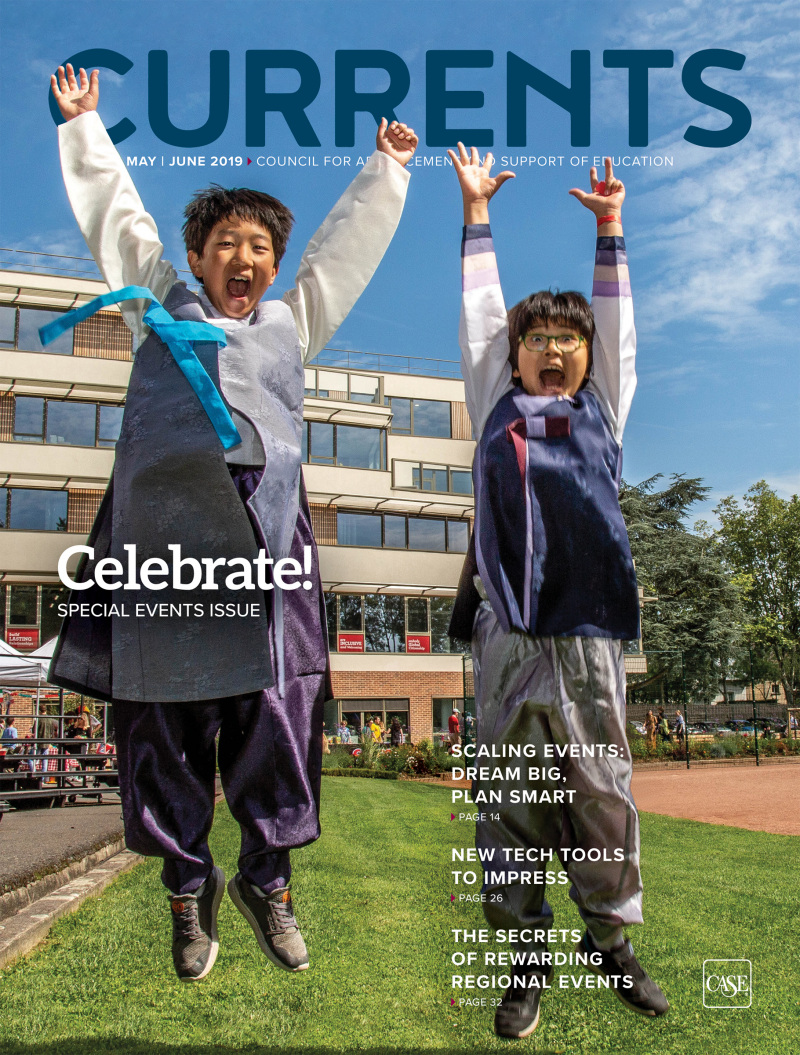
Special Events Issue: From family picnics to campaign galas to regional alumni happy hours, special events can touch every corner of advancement. Let this special events-focused issue of Currents be your guide to planning and pulling off great events.