
Help Your Team Flourish: Recruiting Better
When a recruiter approached Sonya Paul about a role in Melbourne, Victoria, Australia, she was hesitant at first.
Helping Your Team Flourish:
It was early 2024. Paul was working at a national Native arts and culture nonprofit in the United States, but the time was right, family-wise and professionally, for a change. Still, relocating 8,000 miles (12,875 kilometres) from Los Angeles, California—her home for 24 years—seemed “out of the question,” she said.
But then she saw the University of Melbourne’s candidate pack of recruitment materials. In addition to a narrative about the role and the team, there were letters from the hiring manager and the division’s vice president.
“Those messages added real warmth and gave me a sense of perspective—they made the role feel human,” she said. “It made me think, ‘This deserves my full attention.’ I genuinely wanted to move forward with the process.”
In February 2025, she started as Melbourne’s Director of Philanthropy Indigenous (Advancement).
The candidate pack that helped Paul in her recruitment was a key strand in the advancement team’s two-year journey to revitalise its talent discovery and induction (onboarding) program. One goal was widening the advancement talent pool.
“We were struggling to hire people—but more specifically, the right people: People who could grow with us and represent what our campus looks like and what our donors look like,” said Caroline Gibson, former Associate Director of Culture and Capability.
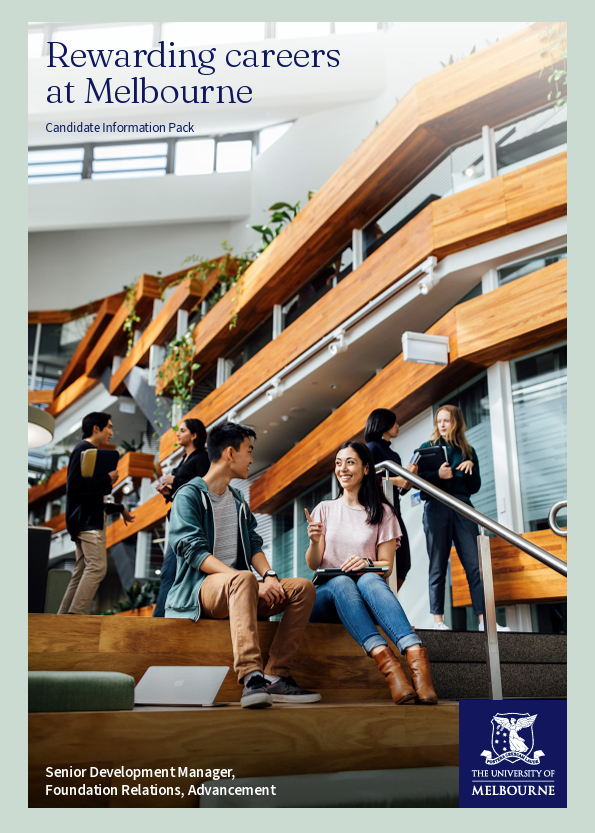
This was one of her first projects when she joined Melbourne in July 2023. (Gibson left the institution in June 2026.) Gibson and her team worked initially with a consultant to analyse and craft new candidate materials. Instead of just a job description, the comprehensive candidate pack includes descriptions of culture and organisational values, and transparent information about benefits, including retirement and family leave. The language is clear and human, rather than complex or formal; the imagery is intentional.
“We wanted to show in the candidate pack that we value the old and the new—beautiful old buildings, but also things like our LGBTI community, so candidates can see themselves here,” Gibson said. “The goal wasn’t more information. The goal was better clarity and confidence for our candidates.”
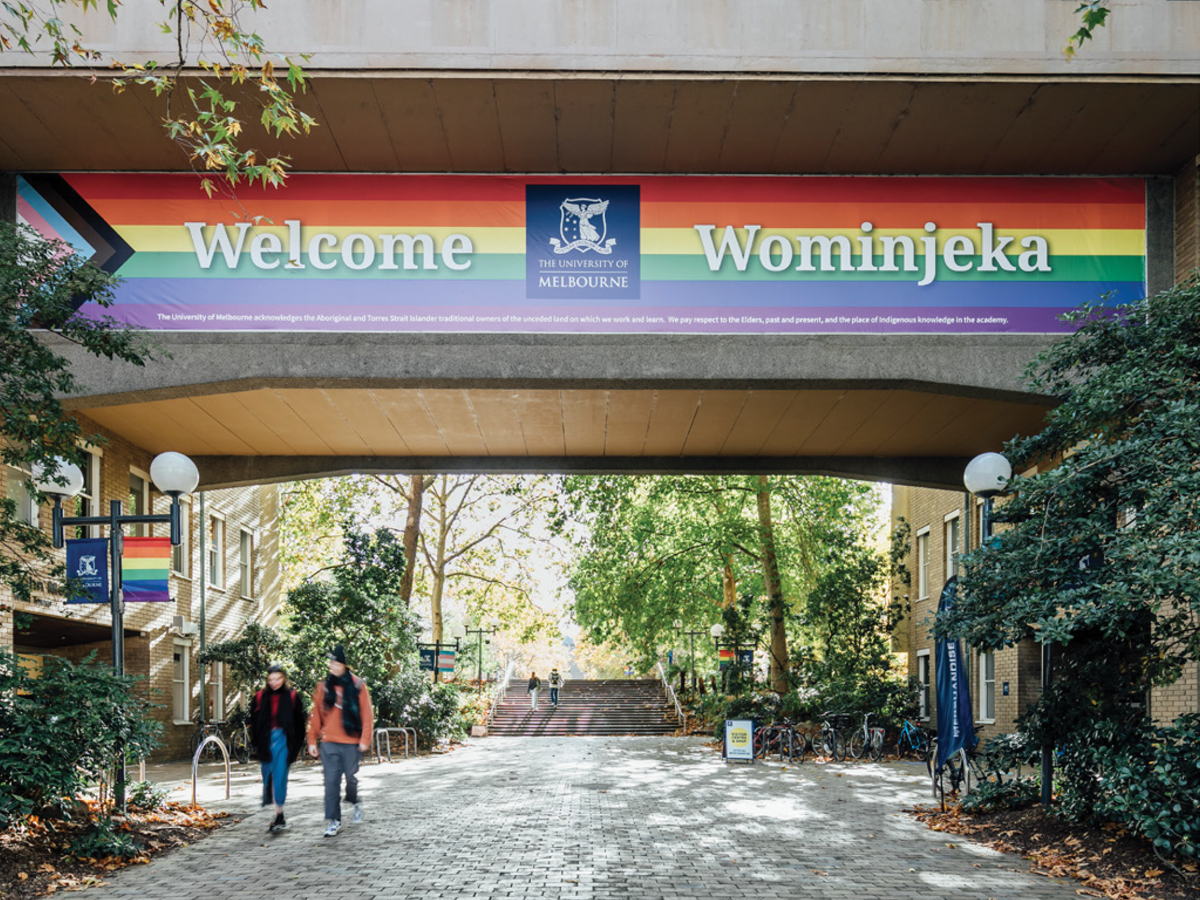
Within six months, the team launched the new materials on a microsite. Since then, some three dozen new hires, like Paul, have joined the advancement team. In staff surveys, more than a third say they wouldn’t have applied had it not been for the candidate pack. The project earned a 2025 Circle of Excellence Award for talent management initiatives.
But getting great team members in the door is just the beginning. Next, Gibson rebuilt the division’s induction process. Fundraisers are busy, she pointed out, and hiring managers need streamlined, up-to-date training materials for their new hires. Leaving behind their previous system of a “clunky, old folder” of materials, Gibson and a colleague built a SharePoint site for new hires with, again, updated imagery and welcoming language.
“I’d close my eyes and think, ‘What would I need to know if I was on day 1? What would I need to know next? What would be too much?” said Gibson.
The new materials give managers clear steps to take on the first day, first week, or first month of the new hire’s tenure.
Melbourne is a large research institution with more than 10,500 staff. It’s a complex place, and it was key to express empathy in these materials—speaking to colleagues as human beings, said Gibson, a trained psychotherapist.
“Once people are comfortable and we do everything we can to reduce their anxiety, then we can flourish and hit the ground running,” she said. “The simplest changes can be really powerful.”
5 Steps to Craft Recruitment and Induction Materials That Work
Language matters.
Use clear, approachable, and accessible wording. Speak to people like people.
Simplify the content.
This is critical, especially in a complex institution.
Have a maintenance plan.
Onboarding materials can quickly become outdated. Have a plan to consistently review and update.
Support managers.
Help them support their new staff members with clear instructions.
Empathise with your audience.
Ask, “What information do they need?” Go in with curiosity and be open to a new approach.
About the author(s)
Tags
Article appears in:
July - August 2026
HELP YOUR TEAM FLOURISH: Solving talent management challenges today, from growing a team, to recruiting better, to doing more with less. Plus why listening should shape strategy, how alumni can support international students, what makes a giving society work, and more.