Bouncing Back
Most conference sessions feature success stories—a fundraising campaign that exceeded expectations, a marketing strategy that increased student applications, or a rebrand that resonated with a campus community. We want takeaways. How can we emulate these happy outcomes?
When Marie-Rose Delauzun and Hannah Fox got together to talk about submitting a session proposal for the 2023 CASE Europe Annual Conference, they had an idea for something different. The two friends and former colleagues wondered, “What if we focused on things gone wrong?” Their session, “How to Fail at Alumni Relations,” was so popular it led to sessions at more CASE conferences, as well as a podcast-style webinar series, Trials and Errors, hosted by Delauzun and Fox. The series has now featured more than 20 guests over eight episodes sharing their mistakes, how they handled them, and lessons learned.
“Delightfully, this story starts with CASE,” says Delauzun, Head of Alumni Engagement at the Sutton Trust, an education and social mobility charity in London, U.K. “Something I’ve always liked about CASE is it’s such a collaborative and supportive space where both Hannah and I were welcomed early in our careers.”
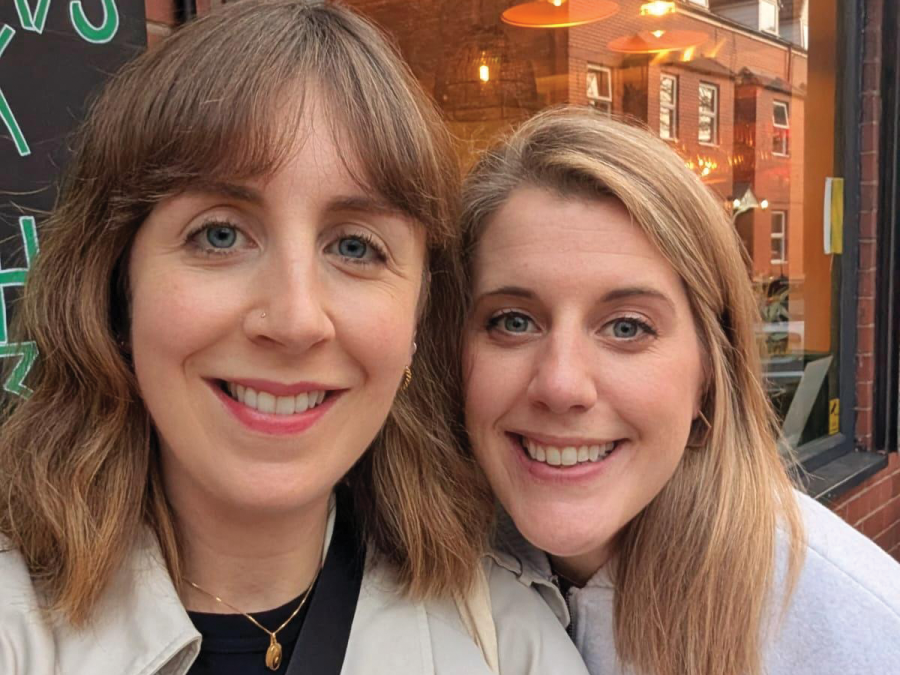
Delauzun and Fox, who is Director of Corporate Engagement (Alumni & Careers) at Regent’s University London, were early-career colleagues at the London Business School. Both credit CASE volunteers who served as mentors and encouraged them to get involved with CASE as participants and then volunteers.
“I’ve had good managers and seen good examples of leadership over the years,” says Delauzun. “As Hannah and I have risen into leadership roles, we’ve had discussions about what kind of leaders we want to be. When I thought about good leaders I’ve had, I’ve really valued those who have been candid and transparent about what has gone wrong and what they’ve learned from that.”
Those discussions led to that novel idea for a CEAC session.
“I don’t think there’s been enough of that on the conference programmes consistently. There have been pockets of it in an ad hoc way, but not as a consistent theme,” says Delauzun.
“We also slightly stole the idea from a popular podcast here in the U.K.,” she adds. How to Fail with Elizabeth Day is self-described as “a podcast that celebrates the things in life that haven’t gone right and what we might learn from them along the way.”
For that first CEAC session in Edinburgh, Scotland, Delauzun and Fox invited three advancement leaders to join the panel, each bringing an example of a mistake, what they learned from it, and how they handled it. The session description noted, “We can all learn from each other—so come with your own questions or learnings to share.”
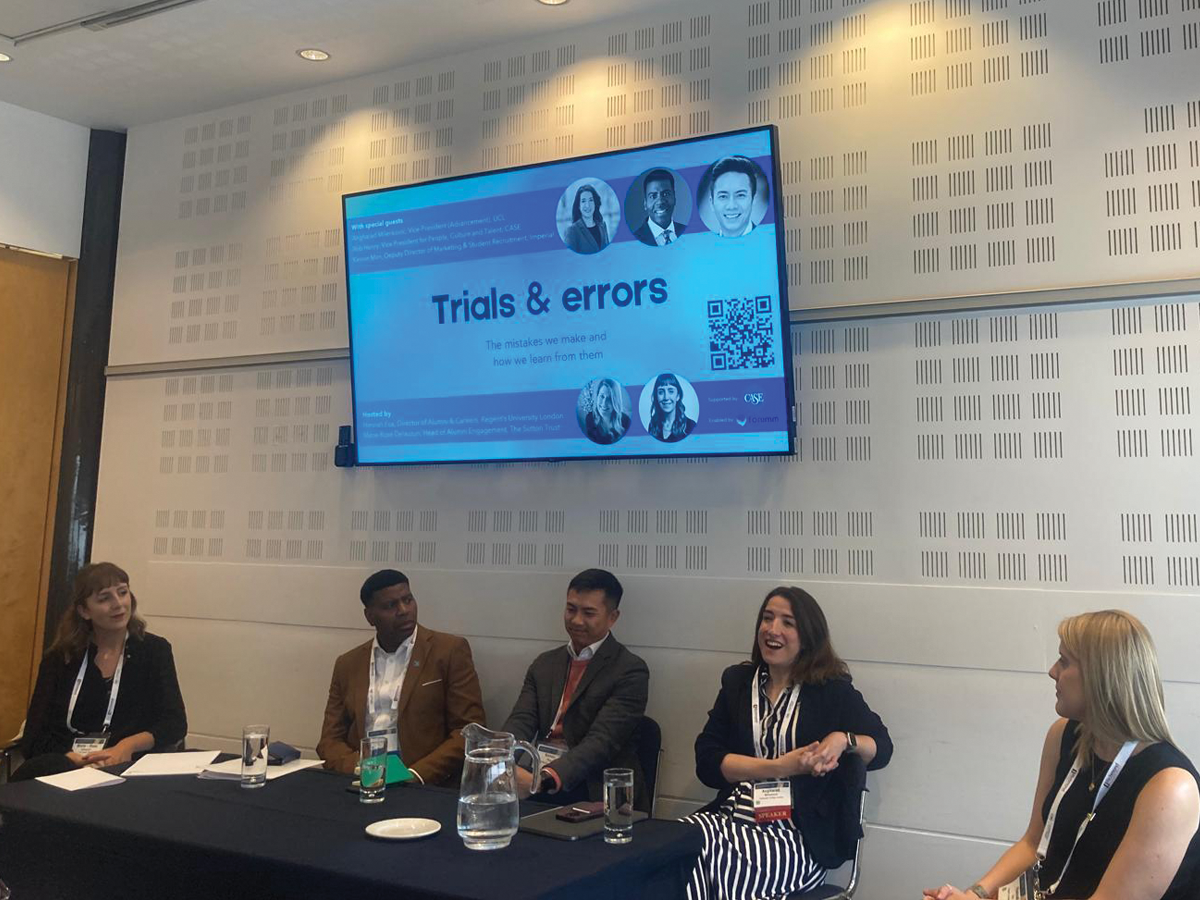
When panelist Claire Brownlie, Director of Student Futures, Liverpool Hope University, U.K., shared the time her alumni magazine team accidentally published an obituary for an alumnus who hadn’t died, there was something close to a collective gasp in the room. But as she shared how the team members owned it, apologized, and looked at their database to ensure it never happened again, audience members began to smile. They could see that Brownlie, like the good-hearted alumnus in question, clearly lived to talk about it.
“That’s the premise I like—everyone makes mistakes. We all know that feeling of dread when you hit send on an email and realize you included the donor when you hadn’t intended that,” says Delauzun. And as panelists and participants shared how they survived those mistakes and what they learned from them, the idea of bouncing back became normalized.
“Everyone enjoyed the discussion. We wanted it to continue,” recalls Fox. She suggested they keep it going through a webinar series. And just a few months later, the first episode of Trials and Errors was launched with Delauzun and Fox as hosts.
While the conference sessions and webinars are intended for advancement professionals at all career stages, Fox says she is particularly excited about how those early in their careers might benefit from them.
“When I was getting started, I found I was paralysed by decision making,” she says. “I thought LBS was going to close, or I would ruin all students’ lives because I made one poor decision. How great it might have been if I heard senior leaders share their own mistakes and how they got through them.”
Thinking about what she would have wanted to hear early in her career, Fox says the webinars are designed to “feel like a conversation. Just the two of us and two guests. They each bring an example of a time when they really messed up, and we ask key questions like ‘Who did you tell? What was your immediate reaction? How did the team react? How did you tell your boss? What was the impact of the mistake? Why do you still think about it? What would you do differently?’”
The mistakes shared have crossed all segments of advancement. In the first episode, Chris Cox, Vice Principal of Philanthropy and Advancement at the University of Edinburgh, shared a fundraising misstep.
“About a decade ago, when I was in a previous role, we had a wonderful donor to a research programme for regenerative medicine,” he started. “He was based in the States and it was a real pleasure going over once or twice a year. I got to know him well. He was really happy getting academic reports and meeting with the academics and Ph.D. [students] once a year. It was about as good a situation as you can get.”
As the university was launching a new and innovative undergraduate teaching programme, Cox said he took it upon himself to bring it to this donor.
“At about the third conversation with the donor, I was going to make the ask and he stopped me mid-conversation and said, ‘Chris, I’m a little confused.’”
The donor wondered why Cox appeared to be diverting him from the regenerative medicine programme and questioned if that was no longer a priority.
“I realized I had been too quick to feel my primary responsibility was to seek funding for a new priority initiative at the university,” said Cox.
The lesson, he said, is that it’s “important to remember that once you’ve found donors who are giving happily to a programme, you need a really good reason to steer them away. A more sensible approach would have been to first see if he was interested in expanding his support. I got it badly wrong. I apologised, and we were fine. We moved on, and he continued to give as generously as he could to regenerative medicine.”
Marketing and communications was the theme for the webinar episode in which Simon Fairbanks, Associate Director of Community Engagement at UniTasterDays (a company that promotes events designed to give students a taste of university life) shared an “email misfire” that was “the biggest mistake in my career.”
At the time, he was working at a large university and he set out to send a targeted email to a group of 300 students interested in studying modern languages. Due to a tiny coding error, the email went to 53,000 people instead. He described that “cold moment of dread when you realize [the mistake], and you can’t even begin to see the wood for the trees of how you will fix it.”
As to what he did next, Fairbanks said, “First and foremost, tell people. Don’t sit on bad news.” He quickly informed his team, including senior management, and says they rallied. Rather than a community of blame, he found a community of solutions. They worked on wording for a “short but polite apology.”
They had about 100 email replies from those who were confused.
“We broke down what we needed to say to each one of those groups within the pool of confused people,” he said. “Only receiving 100 [replies] out of 53,000 was most telling and restored my faith in humanity. Most people realized it was just a mistake, and they didn’t jump to a conclusion. Perspective is a wonderful thing. It could have been much worse. We didn’t work in brain surgery. Nobody died.”
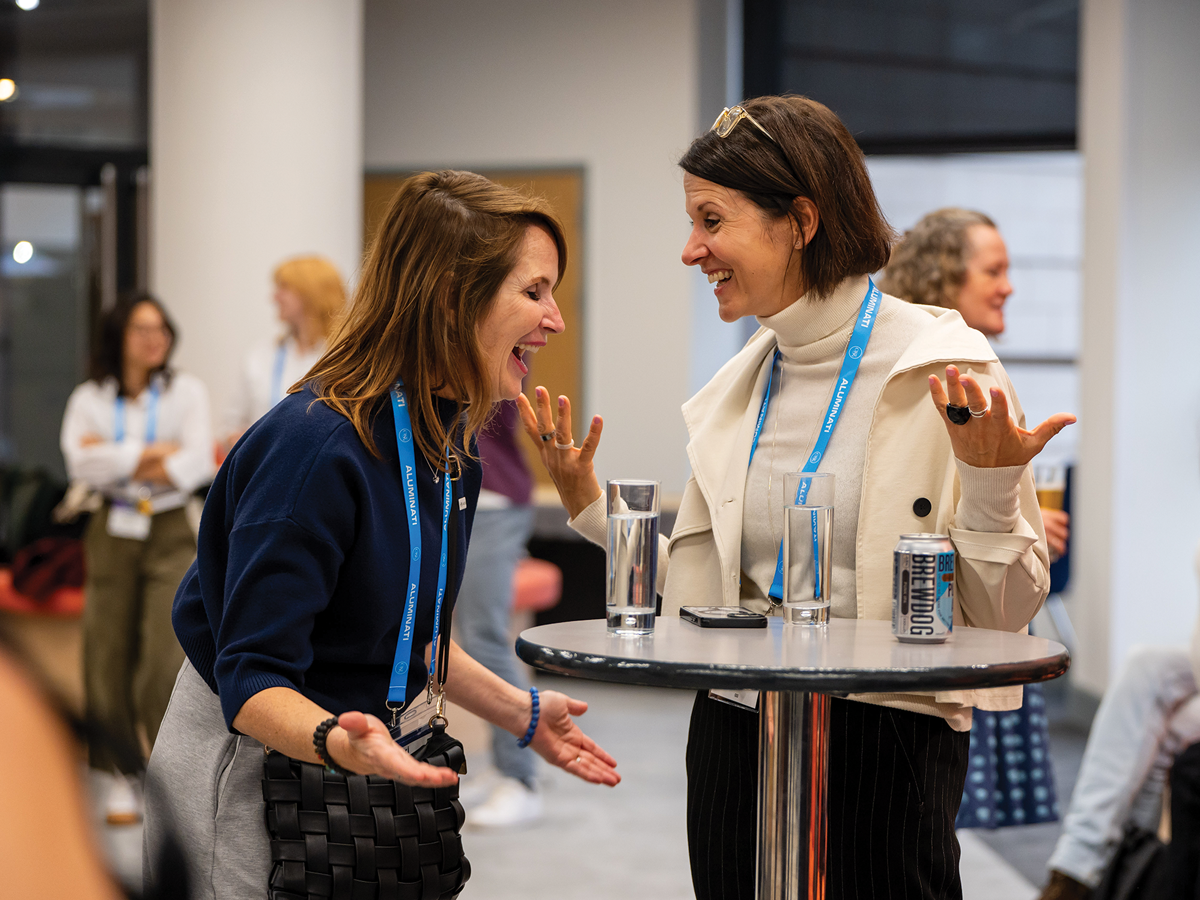
In another episode, Ross Munnelly, Director of Alumni Relations at Dublin City University in Ireland, shared an event-planning faux pas showcasing an instance in which he was a bit overambitious.
“We were a two-person alumni team, both new in our roles, and our institution didn’t have a strong reunion plan,” he told listeners. He and his colleague set out to plan a large one-day reunion event that would bring hundreds of graduates back to campus. They began planning and promotion for the big party, but interest was tepid.
“We made the decision to apologetically cancel the event. The best thing to do when you make a mistake is to put your hands up and admit it. We knew we needed to pull it before continuing to commit the budget,” he said.
Munnelly and his colleague took a step back and took more time to listen to alumni, who wanted smaller, class-based reunions. And that’s where they turned their attention, to great success.
“You can never go wrong when you listen to your graduates,” he said.
The webinar series, from the beginning, has been facilitated by Forumm, an event management company that provides the platform for the series. CASE also helps sponsor and promote Trials and Errors, offering the episodes as on-demand webinars.
As the webinars gained traction, Delauzun and Fox were invited to offer a session on trials and errors at the 2024 CEAC.
“This time it was offered as a cross track beyond alumni relations,” says Fox. “We had a standing-room-only crowd and it ended up being almost like a therapy session, as so many [participants] were sharing their stories through the Q&A segment.”
After that they were invited to offer a plenary session on trials and errors at CASE’s 2025 Advancement Operations conference and a workshop at the 2025 CEAC.
“The most validating and rewarding aspect of this endeavor is when we hear from attendees and listeners using words like ‘reassuring’ and ‘confidence-building.’” says Delauzun.
In an unexpected and full-circle moment, Fox shares something “really nice” that came out of that first session at CEAC in 2023. She says, “I ended up mentoring a young professional who emailed me and said he was at the session and loved the values and energy we were both bringing. I’ve been [mentoring him] for about a year and a half now. That was one of so many lovely things that have come out of this journey.”
Learning From Mistakes
Marie-Rose Delauzun

What Went Wrong
When I worked at London Business School, I was involved in running the communications for their first-ever giving day campaign. I was proud to be delivering a series of hugely varied segments cutting across a global community, with a complex timeline of emails sent over 24 hours. Only trouble was—despite feeling like I’d checked 100 times—when I was sending the final countdown email message out, I still managed to send one segment of several hundred alumni the email “Giving Day Has Started!”… 24 hours before the day was actually due to start. The site wasn’t live yet, so many eager alumni clicked to donate and were instead taken to the countdown page! It was a very public mistake and there was nowhere to hide.
What I Did Next
As the flurry of emails came in pointing out the mistake, I felt so crushed and frustrated that the careful planning had still slipped up right at the start. But, once I flagged it to colleagues and got some much-needed reassurance and perspective, together we quickly came up with some new messaging for that group to own and admit to the mistake (with some optimistic good humour thrown in) and did our best to turn it into a “we were a bit overexcited; not long to wait now, make your gift early” message instead.
Lessons Learned
Timed communications campaigns are always going to be high pressure. I thought I’d checked 100 times, but I still could have asked someone else to triple check the email titles for me before scheduling! I primarily learned that if people can see your intentions were good, and if you’re quickly able to debrief and get some helpful perspectives from the right supportive team members, something that can feel gut-wrenching in one moment can quickly be reduced to a bit of plain old embarrassment. In a fast-paced situation like a giving day, there was no time to wallow in the error or dawdle in our response—so I face-palmed, sought input on the messaging for a follow-up, and then acted quickly to reassure the community that we did in fact know what we were doing. We also had the benefit of learning who the keenest ones in that list were who tried to give straight away, so we tailored a thank-you to them for their enthusiasm!
Hannah Fox

What Went Wrong
I was hired at Regent’s to build an alumni programme for our international community of alumni. I’d come from London Business School and, on paper, the two institutions looked quite similar—highly international; same size and number of students; one on the outer circle of Regent’s Park, the other on the inner circle. I decided to take everything I’d learnt from LBS and put it into a strategy for Regent’s. LBS was a hugely advanced operation, and I decided that’s where Regent’s needed to be. I didn’t take into account how much further forward LBS was as a team, the differences in engagement levels, or the historical context. I just ploughed on and put everything into a strategy that I thought was right and said “Yep! That’s it. We are doing this.” I hadn’t spoken to alumni, I hadn’t understood the context, and I hadn’t asked any questions. I’d taken one thing from one institution and just thought I could apply it to another.
What I Did Next
I was seven weeks into the role when the pandemic hit, and suddenly we were locked down and couldn’t go anywhere. So instead, over the next seven months, I had conversations with individual alumni, groups of alumni, stakeholders, academics, students, and professional services over [Microsoft] Teams, and it quickly became very apparent that what I had planned was absolutely not what we should do. I needed to listen to alumni and really take into account what they wanted and needed from this community. So, in the end, my “brilliant strategy” went in the bin. It wasn’t until 18 months later, after taking the time to listen to the community, that I wrote a new one.
Lessons Learned
A cookie-cutter approach is not a thing when it comes to global engagement. What works for one institution may not work for another, and the only people who can tell you that are the alumni themselves. So, taking the time to speak to them and listen is invaluable. I also learnt how important timing is—setting out quick wins might help calm the nerves of senior management who have hired you for a reason, but having a longer-term vision is equally important. Being able to communicate that with the voice of stakeholders front and centre is key.
About the author(s)
Tags
Article appears in:
January - February 2026
BOUNCING BACK: Lessons in resilience and learning from mistakes. Plus endurance leadership, how training can turn faculty and staff into advocates, one school’s approach to defining a new value proposition, and more.