
Power of the Pen
From the Nominator
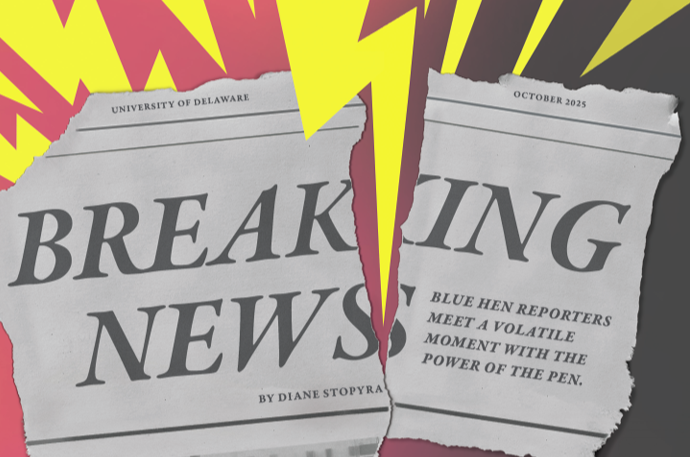
The news is breaking—in more ways than one. Our media ecosystem (and therefore our society) is in crisis, and UD journalists are rising to the occasion. In October 2025, UD Magazine published a five-part series framing journalism as civic infrastructure and showing how Blue Hens are strengthening it. We wrote the series primarily for alumni, with important secondary audiences being Delaware residents, prospective students, and anyone trying to make sense of today’s media environment. Our goal was to explore, in a timely and relatable way, how UD’s journalists and journalism educators are responding to a moment defined by collapsing local news, low trust, and nonstop misinformation. We mixed reported storytelling with practical, actionable guidance. We set the stakes with “The Power of the Pen,” made the case for supporting local reporting in “Backing Your Local Beat,” and then grounded the theme in real people—alumni building community-driven journalism models in “Owning Your Story,” and alumni and students doing consequential accountability reporting in “From Newark to the Newsroom.” To make the series useful (not just inspiring), we also gave readers concrete tools for everyday life: How to spot misinformation, diversify their media diets, and stay informed without burning out in “News Literacy 101.” The impact was a cohesive, accessible package that connected UD’s mission to an urgent public need. It elevated Blue Hens as credible proof points for journalism that serves communities, and it produced evergreen guidance readers can actually use—helping people stay engaged, informed, and thoughtful in a noisy media landscape.
From the Judges
We appreciated the timely nature of the content and the variety of storytelling methods used throughout the submission, including interactive elements that further engaged readers. The use of different formats and mediums gave the piece a modern feel while making the content digestible for a wide range of audiences. The entry clearly identified an important issue and effectively demonstrated how the institution is addressing it, helping bring the story back to institutional impact and purpose.