
Searching for Signs of the Oldest Animal Life on Earth
From the Nominator
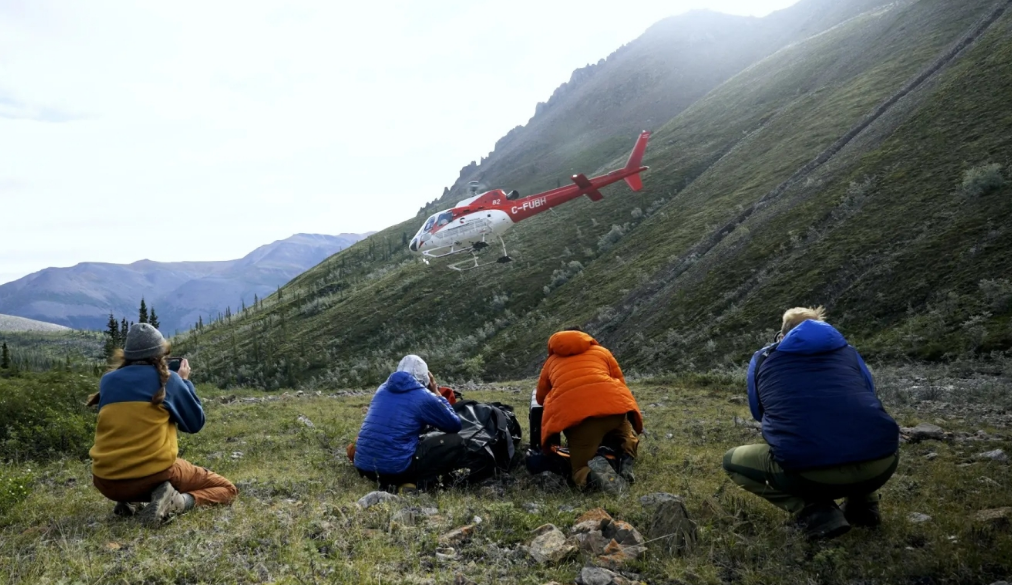
This video and photo essay from Dartmouth documents the work of Professor Justin Strauss and his colleagues, who together are searching for the oldest record of animal life on Earth in one of the world's most rugged and remote locations. After flying by helicopter to their field site in the Mackenzie Mountains—near the border of Canada’s Northwest Territories and Yukon—the team spent two weeks off-the-grid trekking the slopes of 7,000-foot peaks as they examined immense exposed bands of fossilized reefs that were once at the bottom of an ancient sea. The researchers collected fossils of what may be multicellular sponges that emerged when the reefs formed 850 million years ago. The lead researchers and their students are processing their samples using radiometric dating, micropaleontology that identifies organic residues, and 3D reconstructions of the fossils and the overall reef. If confirmed as sponges, the fossils would be the earliest record of animal life by about 200 million years. Dartmouth’s Office of Communications sent a multimedia specialist into the field to interview the team and capture their work in a place few people will ever see, but that could prove essential to understanding how life developed on our planet. After working through hours of video and more than 1,000 photographs, we selected the most compelling and informative visuals for telling the story of this project, its unique setting, and its scientific potential. The resulting content was promoted on the Dartmouth home page and in its e-newsletters and amplified via social media.
From the Judges
This is a compelling example of immersive science storytelling. By embedding a multimedia specialist in a remote location, Dartmouth created a gorgeous, cinematic insight into fieldwork, making complex paleontological research highly engaging. The outstanding strategy and execution delivered a powerful narrative, serving as a strong model for elevating research and inspiring curiosity.