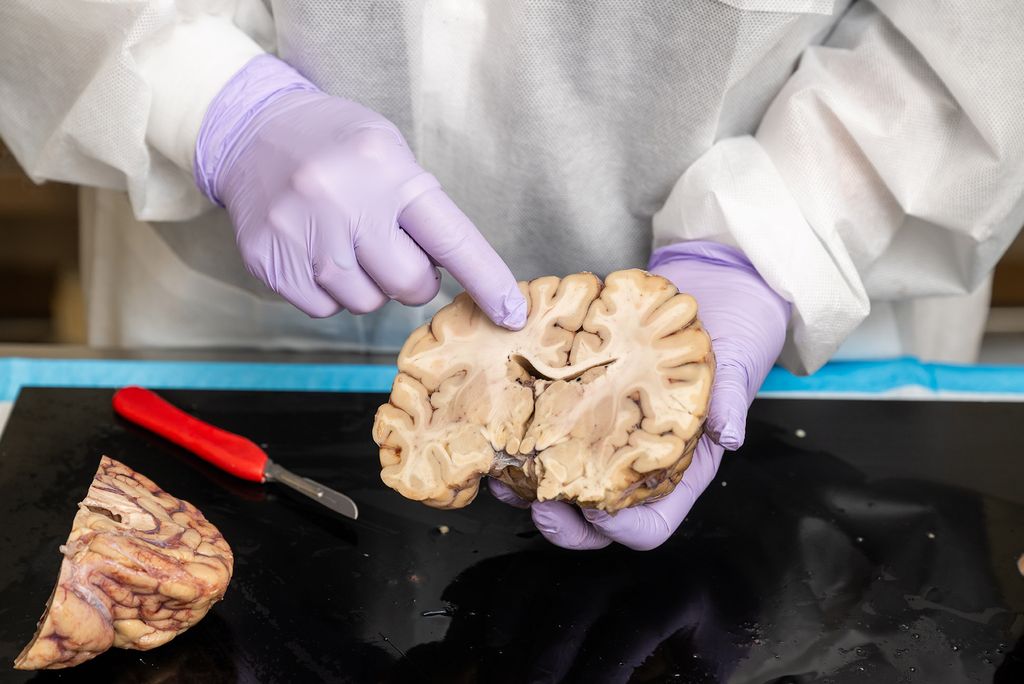
For the better part of two decades, researchers at Boston University have been working tirelessly to find answers about a devastating—and increasingly public—progressive brain disease: chronic traumatic encephalopathy, or CTE. To power this search, BU has amassed a brain bank repository containing more than 1,500 donated brains; it’s the largest of its kind in the world. The diagnosis has become nearly synonymous with veteran players of high-impact professional sports, particularly football. But the disease, which BU researchers have shown is the result of repeated head trauma, can happen to anyone exposed to hits to the head. BU researchers have found evidence of CTE in people as young as 17 and as old as 80. And, for the families of people diagnosed with CTE, there is a twin heartbreak: It is only diagnosable after death, but completely preventable in life. This article from BU’s research news site, The Brink, is the first in a five-part series that explores the disease, the research, and the families for whom CTE is not just an abstract idea, but a terrible reality. People with CTE can display an array of symptoms during their lives, including memory loss, aggression, and anxiety. When they die, it’s up to their families to donate their brains to BU’s CTE Center, a decision that can result in not just a diagnosis for one person, but also a growing body of research on a host of little-understood neurodegenerative diseases.
From the Judges
Beautifully written story that effectively, and dramatically, translates science to human experience. We appreciated the reporting and the writer's ability to bring several voices to the story, telling each fully but stopping short of going too far into the weeds.