
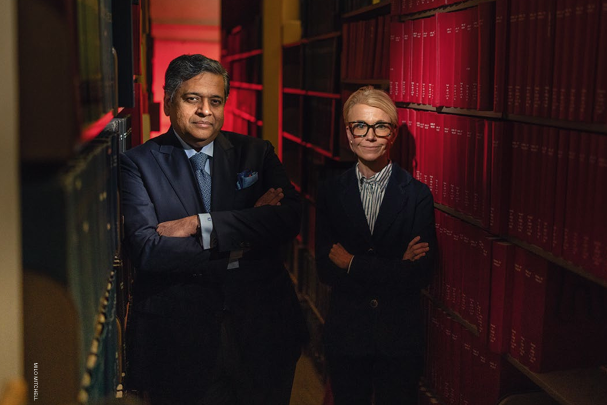
Amara Yad: Erasing the Stain of a Dark Legacy
From the Nominator
For decades, the Topographische Anatomie des Menschen (Atlas of Topographical and Applied Human Anatomy), published between 1937 and 1960, was viewed as an indispensable resource. But by the 1990s, a dark history had emerged: the anatomy was the work of an avowed Nazi, and many of the bodies illustrated were Nazi victims. For surgeons who relied on the atlas, this created a moral quandary. Dr. Kalyanam Shivkumar, director of the University of California, Los Angeles Health Cardiac Arrhythmia Center, was outraged when he learned of the atlas’s origins, and he embarked on a decade-long effort to render the atlas obsolete through a series of original atlases made available to medical professionals around the world via online, open-access publishing. He named the project Amara Yad, a combination of Sanskrit and Hebrew translating to “the immortal hand.” Our two-part feature about this historic effort was published in the Winter 2024 and Spring 2024 issues of U Magazine. Part one chronicles the horrific history of the atlas and how Dr. Shivkumar channeled his indignation into an effort many doubted was possible, to surpass it. Part two documents how the decade-long journey came to fruition and outlines plans for Amara Yad to become something much larger through its aims to use education and actions to address historic transgressions and secure the sanctity of the doctor/patient relationship. The stories’ impact was immediately felt, with increased funding and partnerships with other institutions around the world, and media such as the Los Angeles Times and NPR published their own stories.
From the Judges
Kudos to UCLA Medicine and author David Greenwald on this well researched story, beautifully told, which like Dr. Shivkumar's inspiring work, has become an integral part of bending the arc of history towards justice. This entry distinguished itself from the rest.