Higher education's top leadership role has changed in the last few decades, and it continues to evolve. The traditional path from dean or provost is no longer the norm, and presidents, chancellors, vice-chancellors, and rectors are increasingly tasked with fundraising, marketing, budgets, and media, community, and government relations. According to the 2023 American Council on Education report The Changing College President, “The focus of the president’s role has evolved from academic affairs to more external-facing functions: the fundraiser in chief, the public face of the college, and other critical positions.”
Because of that, many advancement leaders are finding their best partners in their institutions’ executive offices. Here we feature five such partnerships that highlight the many benefits that are reaped when leaders work hand-in-hand with mutual respect, trust, and a shared commitment to their institutions.
North Park University Connection-Building as a Superpower
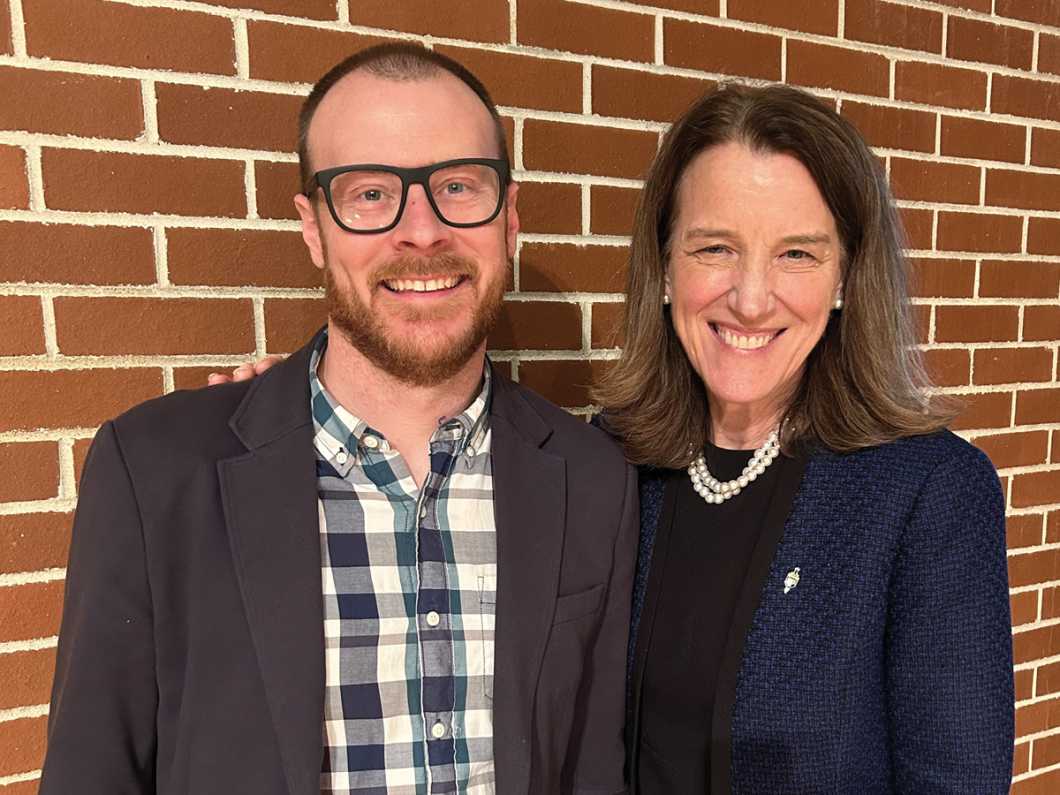
Mike Nevergall has been Vice President for Advancement at North Park University in Chicago, Illinois, U.S., for two years. He says there is a detail about his position that, from time to time, can “raise a few eyebrows. I’ll be at a conference where I’ll meet other advancement vice presidents, and I’ll get something like, ‘Oh, your president is your predecessor? Hmm, tell me more about that.’”
Mary Surridge has been President of North Park for nearly seven years. She has a rich background in education at several universities—as a teacher, basketball coach, dean of students, director of residence life and student activities, associate director of planned and major gifts. And, most notably, she was Vice President for Advancement for 10 years at North Park University before being named its 10th president in the 2018–2019 academic year.
She says she calls on every one of those experiences every day in her role as president, with the advancement vice president role providing unique preparation for the top job. The many relationships she cultivated over the years as an advancement leader are now Surridge’s self-described superpower.
“Even as I think about what our institutional challenges are now, I am filing through my memory thinking about generous alumni and friends who may resonate with a particular need,” she says.
For his part, Nevergall says having a boss who once had his current job has been nothing but an asset.
“The relationship capital she has built over the years—it is her superpower, and it opens doors. She has a unique ability to inspire and encourage donors,” he says.
He makes it his responsibility to ensure judicious use of that capital.
“So many people got to know her as Mary, as a friend, as family. They have her cell phone number,” he explains. “Now the demands on her time are very different. There are some people who believe they should have the president’s time and ear who maybe don’t need to. It’s my job to make sure we are utilizing her time in relationships where she can have the most impact and effect.”