

Rewiring Giving
When the Clark College Foundation team recently set out to sharpen our impact, we asked a big question: What if we stopped treating philanthropy as a string of one-off transactions and instead built flexible engines that could power our mission year-round?
Over two years later, that question has reshaped how our community gives, how faculty and staff innovate, and how students experience support. The change centers on a portfolio of flexible “buckets,” pooled, mission-aligned impact funds that quickly allocate dollars to the highest-impact needs and ideas. Here’s how we made the shift, what changed, and what we’ve learned.
Why We Needed a New Way to Give
Clark College is a community college located in Vancouver, Washington, U.S. Like many advancement shops, our Clark College Foundation team historically fielded a steady stream of discrete requests from faculty and staff: “$1,000 to tune musical instruments,” “software license for a capstone,” “seed money for a pilot program.” Each request could trigger a search for a matching donor, which was often a slow and labor-intensive process.
“When I first arrived at Clark College Foundation over three years ago, it was clear that our students’ needs were moving faster than our funding model,” said Calen Ouellette, CEO of Clark College Foundation. “The Student Success and Innovation Funds were born out of a belief that philanthropy should be just as agile as our students are resilient, ready to remove barriers and champion new opportunities the moment they arise.”
Our students’ realities are dynamic. Clark serves first-generation learners, multilingual students, working parents, and adults reskilling for high-demand fields. Their needs—whether it’s childcare, transportation, emergency grants, or specialized tools—don’t wait for bespoke appeals. We needed a mechanism that matched philanthropic flexibility to real-time need, empowering donors to invest in outcomes and campus partners to propose solutions without delay.
A New Approach: Four Funds
We decided to create four main CCF funds. These funds are pooled donations organized around a mission category rather than a single project. Donors contribute to a fund and qualified proposals are drawn from it. At Clark College Foundation, four funds now anchor our approach:
- Clark College Student Success Fund: Provides equitable access to wraparound resources and programs for students facing multiple barriers. It keeps learners enrolled, progressing, and completing their studies.
- Clark College Innovation Fund: Offers seed capital for student-faculty projects that expand experiential learning. Designed to go beyond traditional state funding.
- Clark College General Scholarship Fund: Provides scholarship support for Clark students to bridge financial gaps, potentially covering the entire cost of their education, supporting part-time learners, or addressing urgent needs so students can stay on track to graduation.
- The Clark Fund: Supports faculty development, campus facilities, the arts, and community events, plus timely investments that sustain quality and seize new opportunities that state funds can’t typically cover.
If the old way resembled a personal chef, this new funding model is instead a well-stocked restaurant kitchen: pantry full, chefs empowered, and a menu that adapts to who’s at the table. It’s shifting from project-by-project to portfolio thinking.
We began fundraising for the Student Success and Innovation funds in early 2023 and have completed two formal grant cycles. The General Scholarship Fund and the Clark Fund, both long-standing pillars of Clark College, were repositioned within this four-fund portfolio to create a coherent, donor-friendly structure.
In the past, a college department would request $1,000 for a specific project, and we would run a mini-campaign or reach out to donors interested in that particular giving category to raise the necessary funds to accomplish the goal. Now, the Clark Fund could cover that essential, recurring need immediately, freeing both the department and our advancement team to focus on bigger ideas.
How the Funds Work
Each “bucket” operates with a clear purpose and scope. Faculty and staff know which fund fits their idea. Donors understand the potential outcomes their dollars support.
For the Innovation and Student Success Funds, we invite faculty and staff to submit proposals during defined grant cycles. That spirit of openness has democratized innovation and broadened the pool of ideas here on campus. Review committees are comprised of representatives from both the college and foundation. We fund projects that align with student success, program excellence, equitable impact, feasibility, and learning value.
Grant recipients report back on outcomes, the number of students served, persistence indicators, and skill attainment.
Because the “buckets” are pre-capitalized through ongoing fundraising, approved proposals are quickly moved to implementation.
Impact Internally and Externally
The most profound internal shift has been cultural: These visible, accessible funds encourage scalable pilots and cross-disciplinary project ideas that departments might not have proposed under a scarcity mindset. The open calls for applicants reduces reliance on ad hoc relationships, amplifying strong proposals from more corners of campus. And finally, multiple initiatives within each “bucket” let us compare approaches, spread what works, and sunset what doesn’t.
For our donors, they appreciate the clarity and flexibility. They can back a fund that reflects their values—student success, innovation, scholarships, or the foundational Clark Fund—without vetting every individual purchase order. That balance of agency and trust is powerful.
“Donors want to know their gifts matter,” Ouellette said. “By organizing giving to these funds, we’ve created a structure that makes impact clear and lasting. It’s a model that honors donor intent while giving us the flexibility to fuel the long-term success of Clark students.”
For emerging philanthropists (alumni early in their careers, local professionals, and community members who want to make a difference now) these impact funds offer a straightforward on-ramp: select a cause, make a gift, and see the impact.
The model also simplifies conversations with corporate and foundation partners. Rather than forcing a fit, we can align priorities with a fund’s portfolio and co-design reporting that meets compliance needs while telling a meaningful story of community impact.
Early Results
Now that we’ve completed two granting cycles, three themes of this approach stand out.
- Speed to support. Flexible scholarships close last-mile funding gaps. Emergency supports, such as transportation, childcare, and learning tools, arrive when students need them. Faculty development and equipment upgrades happen on academic timelines.
- Program quality and persistence. Departments can enhance curricular experiences with industry-relevant tools and credentials that improve student persistence and employability.
- A healthier innovation pipeline. The Innovation Fund surfaces student-faculty projects tied to regional workforce needs, capstones that become prototypes, community-based research, and interdisciplinary collaborations. Some pilots are intentionally small; the point is to test, learn, and scale what works. We call these “Explore Grants.”
Just as important are the projects we didn’t fund. The portfolio lens helps us say no to duplicative efforts, proposals without a clear student-success outcome, or ideas that require ongoing resources a program can’t sustain. In a nimble funding ecosystem, discernment is as valuable as dollars.
Four Funds, One Mission
Moving forward, we’ll continue to run formal grant cycles each year for the Clark College Student Success and Innovation Funds, refine scopes as the college’s strategic plan evolves, and invest in reporting that emphasizes cross-“bucket” learning. We’re exploring deeper alignment with regional workforce priorities to ensure our innovation pipeline both reflects and helps shape the needs of southwest Washington’s economy.
Most importantly, we’ll continue to listen to students who can point out friction we haven’t yet removed in the scholarship application process; to faculty and staff who see opportunities up close; and to donors whose values help us design funds that are both inspiring and accountable.
These funds didn’t change who we are—they clarified how we operate. By transitioning from reactive fundraising to proactive portfolio management, CCF established a funding architecture that aligns with the complexities, rapid pace, and consequential nature of community college life. This streamlined approach made giving clearer for donors, faster for faculty, and more impactful for students. We invite partners to fill the “buckets” that keep dreams moving, quarter by quarter, cohort by cohort, until persistence becomes completion and potential becomes a career.
For institutions considering a similar shift, the lesson is straightforward. Organize giving around outcomes, open the gates to ideas, and let flexibility do what it does best: meet needs, fuel innovation, and keep students on their paths. That’s how philanthropy becomes not just a funding source but a strategic force.
Supporting Student Success and Innovation
Initiatives Funded Through Two of Clark College's Funds
Student Success Fund
The Clark College Basic Needs Hub
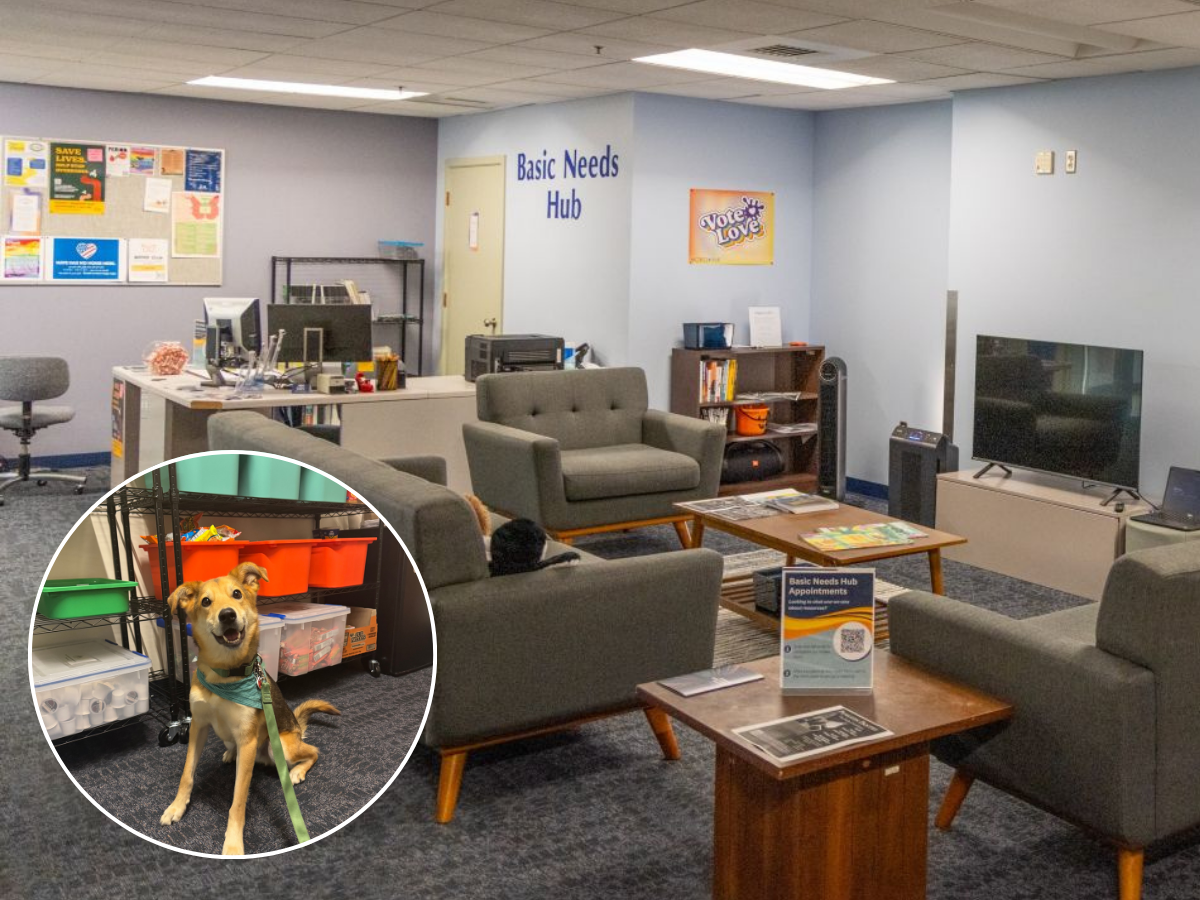
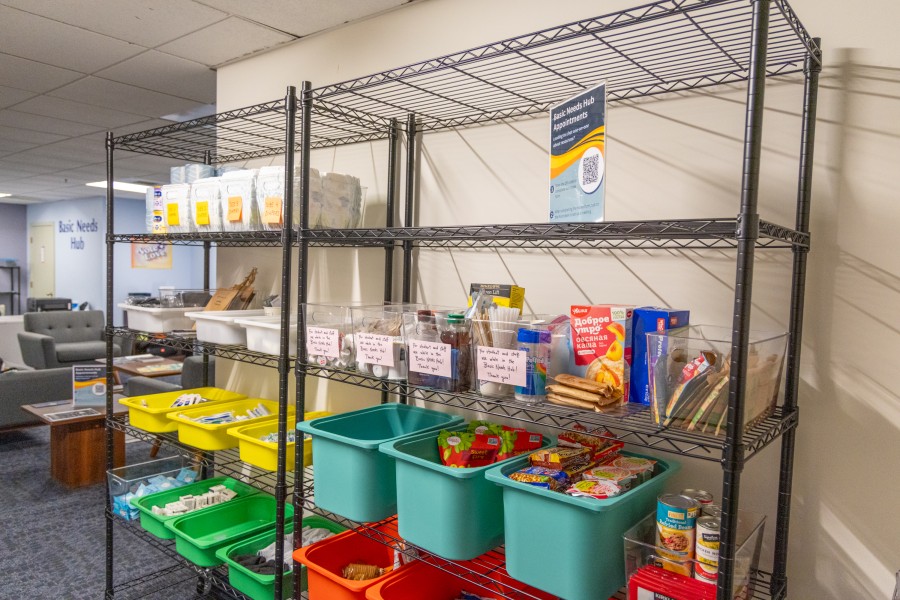
Back for its second year, the Basic Needs Hub provides food, hygiene products, and emergency resources to ensure no student has to choose between meeting their daily needs and pursuing their education.
Veterans Center of Excellence
Military-affiliated students will continue to receive holistic services that help them transition smoothly from service to student life, ensuring they have the resources and community they need to thrive.
Future Teachers Certification Support
Certification costs can be a considerable barrier for education majors. With Student Success support, Clark’s teacher candidates can receive financial help to earn their credentials and step confidently into Washington classrooms.
Creative Writing Internships
Aspiring writers will gain access to mentorship and hands-on professional experience through funded internships, strengthening their skills while opening doors to future careers.
Job Readiness for Students with Disabilities
Funding will enhance on-campus employment and job readiness training through research, workshops, and inclusive supervisor development, ensuring students of all abilities are set up for success.
Innovation Fund

Mount St. Helens Ice Cave Antibiotics Research
Undergraduate research is a game-changer, especially for underrepresented students. But did you know it’s rarely available at community colleges? Biology students will analyze samples from Mount St. Helens ice caves as part of their antibiotics research. Plus, microbiology students will explore ice cave microorganisms, bringing real-world discovery into the classroom.
Covering Tuition for College 101
Starting college can be tough, and some students require additional support to complete their studies. That’s why the Innovation Fund stepped up to cover tuition and fees for College 101, a course designed for students who may need additional support in adjusting to college life after their first term. College 101 helps students develop essential skills like academic planning, financial literacy, communication, and more.
Streamlining Dual Credit Acquisition
High school students in our region will soon have an easier path to earning college credit through Clark before graduation. This streamlined system makes higher education more accessible and attainable for tomorrow’s workforce.
Content Creation Equipment Library
Thanks to Innovation Fund support, Clark faculty and staff will have access to a new equipment library, putting cameras, microphones, and other tools directly in their hands. This resource will help bring their programs and stories to life with professional-quality content.
About the author(s)
Tags
Article appears in:
April - May 2026
DIGITAL-ONLY ISSUE: Giving through, not just to: transforming philanthropic messaging. Plus the latest in naming rights, how investing in students today sets the foundation for alumni engagement, rewiring giving through high-impact funds, and more.