
CASE Insights on Fund Management in partnership with FundMiner
Why Fund Management Matters Now More Than Ever
CONTENTS:
- Why Fund Management Matters Now More Than Ever
- A Two-Year Research Initiative
- Understanding the Current State of Fund Management
- Three Components of Fund Management Work
- Fund Management Staffing
- Four Imperatives to Drive Institutional Progress
- How CASE Can Support Fund Management Work Moving Forward
- Acknowledgements
As reliance on philanthropic support has increased across higher education, colleges and universities have invested heavily in frontline fundraising to focus on securing gifts, meet ambitious goals, and close out record-breaking campaigns often measured in the billions. Far less attention, however, has been paid to what happens once those gifts are accepted.
Institutions increasingly recognize that effective stewardship extends beyond fundraising and requires intentional oversight of how funds are managed and utilized. Three factors, in particular, are driving a growing sense of urgency around fund management: risk management concerns, financial headwinds across higher education, and ongoing donor retention challenges. Fund management is an essential but often overlooked component of enterprise risk management for colleges and universities. As one practitioner noted,
“We put a lot more pressure on getting the money in the door and being able to count it to hit campaign targets, but we aren’t as focused on honoring the spending of those dollars and the donors’ intent.”
Several additional risks associated with poor fund oversight, including legal challenges stemming from conflicts between donor intent and institutional priorities, reputational damage resulting from findings of misspent funds, and ethical obligations to honor donors’ philanthropic wishes. Over the past two decades, high-profile lawsuits involving the University of Pennsylvania, Princeton University, the University of Chicago, and the University of Missouri have underscored the importance of honoring donor intent. i
Beyond legal concerns, fund management also has significant implications for institutional reputation. During this whitepaper research initiative, practitioners emphasized how donors trust institutions to use their gifts as intended and to demonstrate meaningful impact. Failure to meet these expectations can erode institutional credibility. One participant noted, “This is an enterprise-wide risk management issue…We want to be ahead of the curve, not scrambling because something went wrong.” Similarly, Haider Ali, Head of Strategic Partnership & Marketing at Fundminer, argues there are direct implications for institutional governance and accountability, highlighting how “Stewardship is no longer just a function of advancement; it reflects how effectively the institution manages its commitments.” ii
Broader financial headwinds across higher education are adding to the urgency around effective fund management. Reductions in federal research funding and state appropriations, combined with demographic shifts and inflationary pressures, have created financial constraints and budget shortfalls at many U.S. colleges and universities. Over the past two years, a growing number of institutions across the higher education landscape, including the University of Wisconsin–Madison, Duke University, The New School, Southern Oregon University, and Idaho State University, have announced layoffs, hiring freezes, program reductions, and other cost-cutting measures. As institutions are asked to do more with fewer resources, the visibility and stewardship of philanthropic funds have become increasingly critical. Clearly and consistently communicating how these funds support students, advance faculty research, and sustain institutional priorities is essential for reinforcing mission alignment and maintaining confidence among a variety of key stakeholders. In an era of constrained resources, institutions can no longer afford to leave philanthropic assets underutilized or disconnected from their strategic priorities.
Ongoing donor retention challenges in higher education are further reinforcing the need for more effective fund management practices. As expectations for transparency and accountability continue to rise, donors are seeking clearer evidence of impact. For example, a 2023 research report from Independent Sector found that approximately “80% of donors want to see proof of impact before continuing their giving, reflecting a broader shift toward more outcomes-driven philanthropy.” iv At the same time, donors are also more willing to reassess their commitments when expectations are not met. Given that donors often share experiences within their personal networks, stewardship challenges are rarely confined to a single relationship; instead, they can quickly shape broader perceptions of trust and influence future giving behavior. Collectively, these dynamics underscore the critical role of fund management in maintaining donor trust, strengthening relationships, and sustaining long-term philanthropic support.
A Two-Year Research Initiative
In 2024, CASE Insights launched a two-year research initiative in partnership with FundMiner focused on fund management with the goal of better “understanding how funds are currently managed across CASE member institutions [in order] to provide guidelines for standardization and best practices for communicating use and ensuring intent to donors.” Three primary drivers informed this work:
- Addressing ethical considerations through the establishment of key definitions
- Taking a deeper look at the CASE 2021 Global Reporting Standards
- Exploring emerging synergies between CASE member needs and Educational Partners
Jenny Cooke Smith, Executive Director of CASE Insights noted, “We found ourselves asking, ‘How do we have the next conversation around ensuring that the work we are doing can really adhere to these standards?’ And that was part of the impetus as we thought about this project.”
During year one, research activities included a CASE member survey and a series of four roundtables, each focused on a distinct theme ranging from Oversight and Responsibility (Session 1) to Continuous Monitoring and Data Hygiene (Session 4). Thirty-one U.S. colleges and universities participated in the roundtables with 74% representing public institutions. Three global institutions (two from the United Kingdom and one from New Zealand) as well as one independent school were also represented at the roundtables. Attendee titles ranged from Fund Compliance Program Manager to the Director of Gift Administration to the Associate Vice President for Donor Strategy and Special Initiatives.
In year two, early research findings from the roundtables were shared at the CASE DRIVE conference to help guide the next steps. 2025 and 2026 benchmarking survey data collected by the FundMiner Annual Benchmarking Survey v was also analyzed to provide additional insights into the scale, scope, and ongoing evolution of the field. Finally, nine additional in-depth research interviews were conducted with fund management practitioners in the U.S. These interviews helped develop the institutional profiles featured in this whitepaper and provided deeper insight into the ways that CASE can support fund management work moving forward. Ultimately, this two-year research initiative deepened the understanding of fund management and highlighted practical opportunities to strengthen the field in the years ahead.
Understanding the Current State of Fund Management
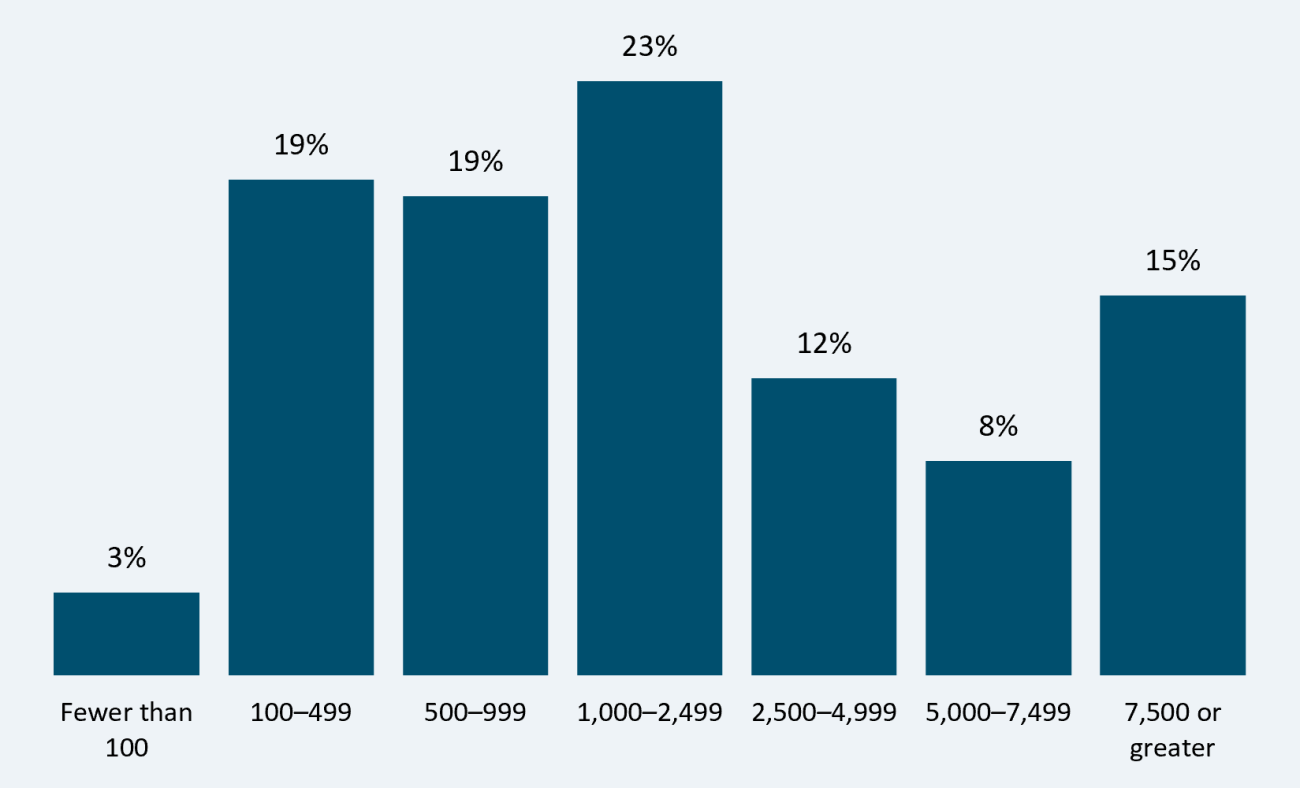
Currently, the scale of fund management work varies greatly across institutions. Among roundtables attendees, the number of endowed funds ranged from 70 at one institution to more than 6,500 at another. The number of endowed funds is on the rise: the FundMiner 2026 Annual Benchmarking Survey found that the total number of endowed and current-use funds at education institutions continues to expand. Among the 154 education institutions that provided information on their fund count, 23.4% reported managing between 1,000 and 2,499 total funds, while 15.0% reported managing more than 7,500 total funds.
FundMiner’s 2026 data also highlighted the extent of fund utilization challenges. Overall, 62.7% of institutions reported that more than 10% of their funds go unspent annually, while 43.5% indicated that more than 20% remain unspent each year. The median value of unspent funds was $10 million per institution. Given the scale of these challenges, it is not surprising that many professionals emphasized capacity constraints, with one noting that “There is more work to be done than hours in the day. We can only tackle so much given the limited resources.”
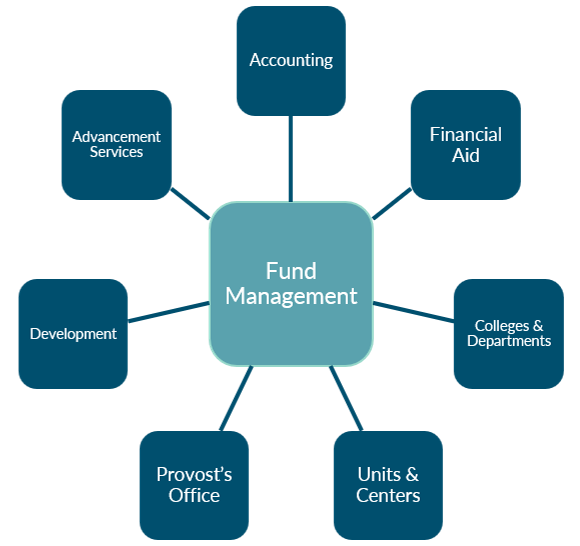
As the number of funds and unspent balances continue to grow, fund management increasingly requires collaboration across the institution. Both the roundtables and interviews illustrated the complex and interdisciplinary nature of fund management work. It frequently involves a range of offices including accounting, development, advancement services, and financial aid, as well as individual faculty, staff, and students. As a result, practitioners frequently stressed how difficult it is to fully capture the scope of fund management because pieces of the work often “live in like 27 places.”
Effective fund management requires coordination and cooperation across divisions, often in environments where the incentives, responsibilities, and expectations for collaboration are not always clearly defined. These challenges are reflected in the relative immaturity of fund management practices at many institutions. When asked to assess the current state of their efforts, most roundtable participants placed their institutions in the early phases of developing more formal and coordinated approaches to fund management. Only a handful of the most advanced institutions at the roundtables identified as proactive, and none reported having reached the sustained stage, where fund management practices are comprehensive, institutionalized, and fully embedded across the organization.
Where does your fund management program really stand?
Three Key Components of Fund Management Work
There are three core elements of fund management work at U.S. colleges and universities:
Fund monitoring and internal reporting
Financial and impact reporting
Ongoing maintenance and compliance
Fund Monitoring and Internal Stakeholder Reporting
Most roundtable participants shared they were in the early stages of establishing formal fund monitoring and internal reporting systems at their institutions. The majority of these efforts concentrated on endowed funds, with priority given to scholarships (both endowed and current-use), followed by other endowed funds, and then all remaining funds, including current-use. The baseline practice at most institutions involves producing annual reports for each college, department, or unit that lists available funds, fund balances, and spending activity. These reports typically flag funds with no spending, low-utilization, or unusually high balances.
However, most practitioners described their current approach as largely reactive and operational rather than strategic. In many cases, efforts remain concentrated on individual fund tracking and rely heavily on manual processes. Day-to-day work is often driven by campus partner requests, donor reporting needs, and preparation for future solicitations. Even institutions with established quarterly or monthly reporting structures expressed a desire to evolve their approach, noting that most reporting focuses primarily on whether funds are spent. Roundtable attendees emphasized the need to pay greater attention to how funds are used and whether spending decisions align with donor intent.
Communicating Financial Data and Impact to Donors
Currently, U.S. colleges and universities primarily communicate financial data to donors through their annual reports. Based on the roundtable discussions, there is broad consistency in the content shared across these reports. Institutions generally prepare these reports for endowed fund donors and include financial information such as beginning principal value, beginning market value, ending principal value, ending market value, the amount available for distribution, and high-level spending information. These reports often also include broader information about the university endowment, such as investment performance and general data on asset classes. Roundtable participants stressed that sharing this level of financial information with donors is important because “it shows that we are being mindful and strategic about managing their funds.”
Both the roundtables and interviews, however, highlighted considerable variation in the units and staff responsible for producing donor-facing reports. Some institutions have a highly centralized model in which advancement services or donor relations oversees reporting on both financial data and impact narratives, whereas at other institutions the foundation oversees endowment reporting while impact reporting is decentralized and handled primarily by individual colleges and units.
While some impact information is usually included with annual endowment reports, this is an area where colleges and universities want to do more, particularly around sharing the impact of unrestricted funds, reaching more donors through broad-based reporting, and obtaining higher-quality narratives from faculty, students, and fund users. In an environment where donors are increasingly seeking information about outcomes, impact reporting is a critical component of stewardship. Yet both roundtable participants and interviewees emphasized the difficulty of collecting narratives from fund users in a timely manner. They also noted that the quality of impact reports varies widely, particularly among faculty, with some individuals sharing key accomplishments, photos, and detailed examples while others provide minimal information. Some institutions are helping fund users across campus create stronger impact summaries through reporting prompts.
Creating Impact Reporting Prompts at South Dakota State University Alumni & Foundation At South Dakota State University (SDSU), the Alumni & Foundation has been working to help endowed position holders tell stronger stories that highlight the impact donors are having through their gifts. Carolyn Poss, Vice President for Philanthropic Fulfillment, noted that they developed “a list of questions to help our position holders tell a bigger and better story for our donors.” These prompts include questions that encourage individuals to reflect on highlights from the year, unique sources of inspiration, and contributions to their area of focus or current initiatives. One question asks individuals to reflect on “What continued development, integration, or application of existing initiatives and strategies are you most excited about?” Another prompt asks about new areas of research or potential initiatives for the coming year. Carolyn shared that they strategically included this question because they recognized how important “it is to showcase the future potential to help with gift renewals.”
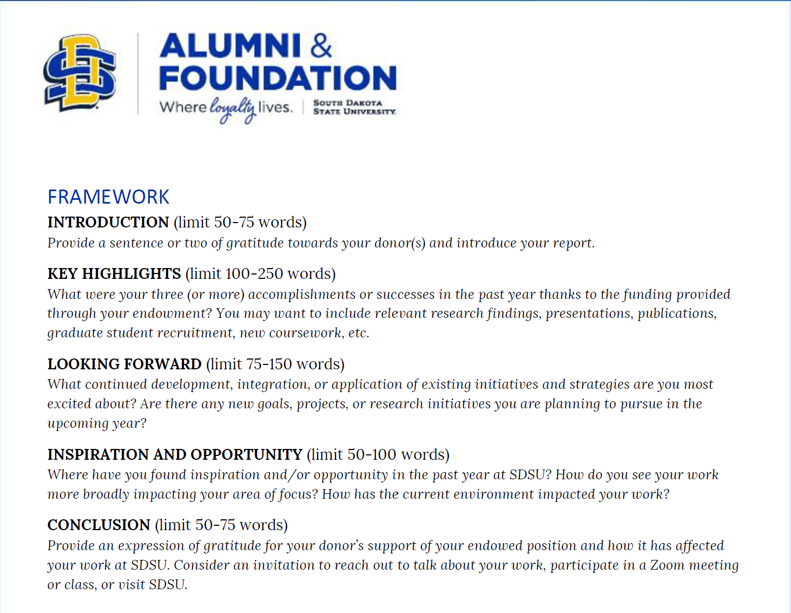
To ensure timely submissions, the prompts also include instructions covering format and a detailed timeline covering the major process steps including check-ins, impact report first draft, and deadlines for changes to the final version. At SDSU, these prompts are helping fund users across campus develop more compelling stories that highlight both the impact of donor support and opportunities for continued investment. |
Beyond the practical challenges of collecting and improving impact narratives, roundtable participants also debated the relative importance of storytelling and financial reporting in donor communications. The broader question of whether higher education should lead with the head (financial facts and figures) or the heart (storytelling) when communicating impact resonated strongly with participants and pointed to potential cultural differences across CASE regions. Compared to the U.S., universities in the UK typically have fewer endowed funds and devote relatively little time and effort to providing financial reports to donors. During the roundtables, UK attendees questioned whether donors truly want the level of financial reporting that U.S. institutions currently provide and whether they can meaningfully interpret it. Attendees from outside the U.S. shared that their donor communications focus primarily on impact and compelling stories rather than financial details.
Similarly, several participants who had worked in both healthcare and higher education noted a stark contrast in donor communications between the two sectors. One attendee shared, “I came from healthcare and what we do in higher ed is way more financially focused. In healthcare, donor stewardship was the focus. In higher education, money is the focus. It is transaction-focused first, and stewardship comes second.” Another attendee with experience in both industries observed, “If you are bothering to do a report for [donors], then the story is what matters. I have always thought the financials are second. I have never had a donor ask, ‘What did you spend the money on?’ They want to hear about the student who received their scholarship or the teacher who participated in a professional development trip because of their gift.”
While financial accountability remains an important component of donor stewardship, roundtable participants and interviewees emphasized that impact stories often resonate most strongly with donors and reinforce the value of their philanthropy, particularly as donor expectations increasingly center on outcomes and impact. As highlighted earlier, expectations for transparency and accountability continue to rise and donors are seeking clearer evidence of impact, with 80% of donors expressing desire to see proof of impact before continuing their giving. iv
Ongoing Fund Maintenance and Compliance
Ongoing maintenance and compliance represents the third component of fund management work. It includes activities such as cleaning up and closing inactive funds, revising and maintaining gift agreements, and auditing expenditures to ensure alignment with donor intent. It also involves strengthening data integrity and addressing administrative issues that are often overlooked in day-to-day operations. Practitioners emphasized how this work is frequently under-resourced despite its importance, with several noting that compliance is central to honoring donor intent. Others pointed to risks that can emerge when funds are not regularly reviewed, including situations where outdated or missing criteria require institutional action. These issues can be especially challenging for funds associated with deceased donors, where stewardship of donor intent becomes more complex over time.
Across both the roundtables and interviews, there was broad agreement that maintenance and compliance are critical components of fund management, even though they often receive less attention because of staffing and capacity constraints. While spending remains the most immediate focus for many institutions, practitioners emphasized that long-term success in this space also depends on maintaining strong compliance and stewardship practices.
Fund Management Staffing
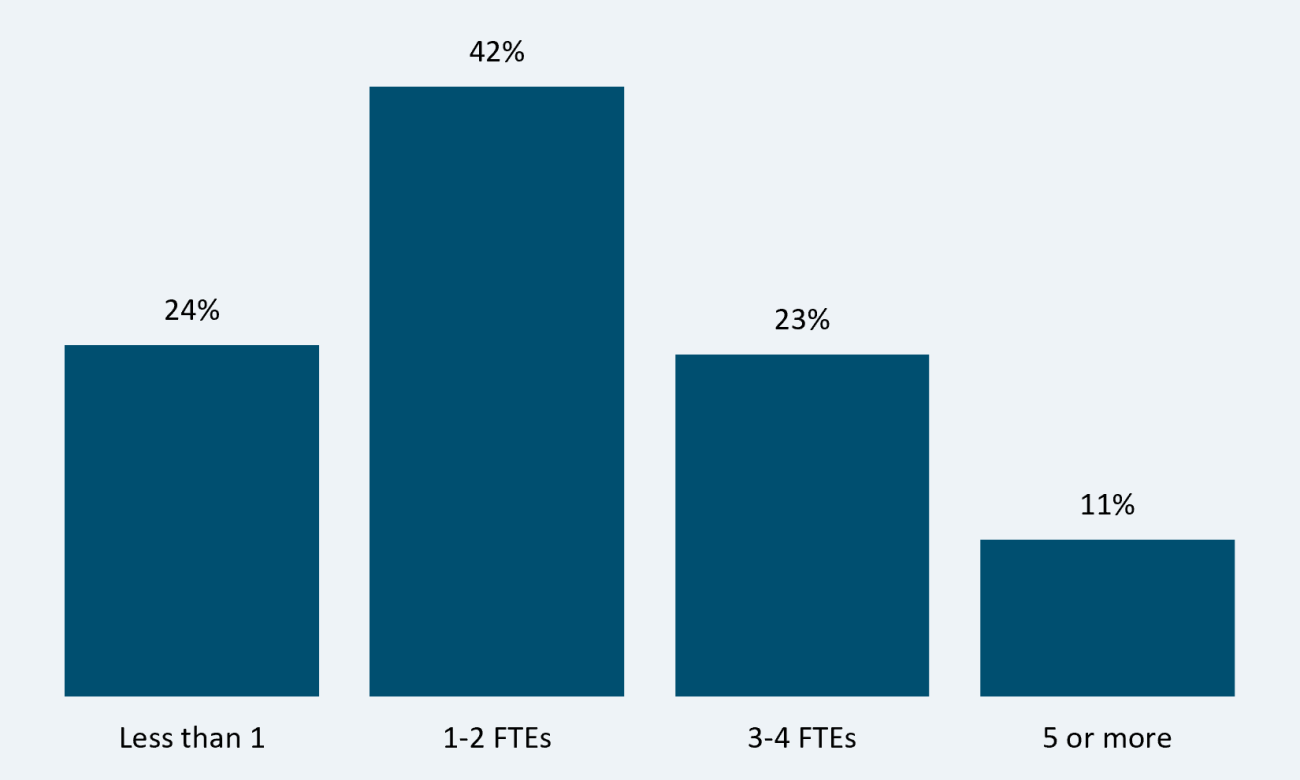
Although institutions are increasingly dedicating more time and resources to fund management, staffing approaches vary widely. FundMiner’s 2026 Annual Benchmarking Survey found that 24.1% of education institutions that reported staffing data (n=158) currently have less than one full-time equivalent (FTE) dedicated to this work, often handled as a “side of desk” responsibility, while 41.8% have 1–2 FTEs and 23.4% have 3–4 FTEs.
Roundtable discussions also underscored the growing trend of creating dedicated fund management roles at U.S. colleges and universities. For example, roundtable attendees from Oregon Health & Science University, Colorado School of Mines, and Northeastern University noted that their positions were relatively new, with most created within the last two to three years. These dedicated fund management roles typically focus on utilization and are usually housed within advancement services.
Creating a Dedicated Fund Management Role at Emory University
In 2022, Emory University established its first full-time role dedicated to fund management. Josh Greenbaum, Executive Director for Gift Operations, who served as the Senior Director of Fund Management until recently, noted that the rationale for creating the position was to have someone focused on fund management “on a consistent and steady basis, which is what it needs to be effective.” While the role’s responsibilities ranged from monitoring fund spending and ensuring institutional compliance with donor intent and documented restrictions to developing spending plans, he shared that much of his early work involved “trying to figure out what fund management means and what it needs to look like to be successful at Emory,” given its scale and scope as a complex R1 university with a significant healthcare component and a large undergraduate population. Often, he balanced the daily work of tracking fund spending and compliance, while trying to be systematic and proactive, with “handling all the other geysers of fire and one-off issues that pop up.”
As a “one man army,” Josh worked hard to establish relationships across campus by demonstrating how he could be helpful to others. In particular, he found that two data points were very effective in getting academic partners thinking about fund management: 1. How much unspent money are they sitting on? and 2. How many years of incoming cash flow are they sitting on? He also noted that in many cases, his analyses and partnerships with units and departments illustrated that
“The vast majority of time there is no structural reason the money isn’t being spent. There is nothing in the gift agreement, or that originated in the gift agreement, that is keeping them from spending the money….A lot of the time people just don’t know what the money is and how they can spend it.”
As the dedicated fund management person, his role was to make units aware of the funds available to them and share relevant information on how they can spend it.
While Josh focused his efforts on data sharing and spotlighting funds that require spending plans to drive progress in certain areas, additional work is still needed to establish institution-wide policies and procedures, such as a reinvestment policy and a nominal fund balance policy, as well as clearer roles and responsibilities across campus. Overall, creating a dedicated fund management role has allowed Emory to raise awareness of this work, make progress in addressing unspent funds, ensure alignment with donor intent, and identify opportunities to create more consistent expectations and policies across the university.
While many institutions are still early on in their fund management journey, the roundtables and interviews highlighted a handful of organizations with dedicated fund management teams, typically consisting of two to three staff members. Having a dedicated team was a frequently cited wish list item among roundtable participants, as it would enable them not only to manage the day-to-day compliance work, but also to take on more complex funds and engage in more proactive problem-solving.
Developing a Robust Fund Management Team at University of Nebraska Foundation
The University of Nebraska Foundation began its work on fund management in 2014 after underutilized funds were identified as a key performance indicator (KPI). To address this challenge, the foundation established the Assistant Director of Funds Management and Stewardship position, a new role dedicated to improving fund utilization. As part of this effort, the foundation also created a nominal funds policy and launched quarterly emails to key internal stakeholders highlighting underutilized funds. Aaron Rouse, Senior Director of Funds Management Stewardship, shared that when this work began at Nebraska, “we initially thought underutilization was our problem, but as we dug in, we found that it was a symptom of lots of other things happening under the surface.” Between 2017 and 2020, the Foundation addressed several of the underlying issues it identified, including establishing a funds management working group to raise awareness, changing reporting lines to place the dedicated funds position under finance, and implementing a quasi-endowed reinvestment policy.
Starting in 2021, the institution had an opportunity to rethink both its fund management work and organizational structure, as related responsibilities were scattered across multiple areas. Staffing expanded during this period, with the number of full-time employees focused on this area increasing from one to four. The dedicated fund management team now centrally handles “everything that happens after the fund is set up, with the exception of direct donor stewardship.” This investment in a dedicated fund management team has not only significantly reduced fund underutilization rates but also enabled a more consistent approach to ongoing fund maintenance.
Aaron highlighted how the team regularly carves out time to do “things like making sure we are cleaning up and closing out funds, making sure we are keeping data integrity high, the type of work that unfortunately usually gets put on the back burner.” While few institutions have dedicated resources to fund management at the scale seen at Nebraska, the benefits of stronger compliance, improved fund utilization, and enhanced donor trust make the investment worthwhile.
Four Imperatives to Drive Institutional Progress
Imperative 1: Tackle Fragmented Systems and Teams to Unlock Institutional Data
To make meaningful progress in fund management, colleges and universities need to break down institutional silos and integrate fragmented systems to unlock the full potential of their data. A major obstacle to effective fund reporting and monitoring is the current lack of integration among advancement CRMs, accounting systems, scholarship platforms, and units or departments. These information silos make regular internal reporting a challenge at most institutions as data and documentation is often housed across multiple systems and staff must manually piece together fund information. This complexity increases for institutions with multiple foundations and/or health science enterprises. As a result, staff spend extensive amounts of time consolidating information, aligning and cleaning data, and repackaging it for internal stakeholders. As one roundtable attendee wearily noted, “Our tools are caffeine and Excel at this point. I would love to have something better.” Practitioners also frequently encounter difficulties accessing data from other systems across campus. As a result, fund management professionals often spend significant amounts of time working across functions to secure the permissions necessary to access internal data.
Currently, there are three primary approaches institutions are taking to increase data accessibility. The first approach is assembling a “giant Excel spreadsheet” that serves as the primary home for fund management information, portions of which can be shared with campus partners to increase transparency. However, practitioners recognize that this approach is less than ideal because of the time-intensive process required to create and maintain it, its limited visibility, and the need for regular manual updates.
The second approach is investing in outside tools and software to help centralize and streamline fund tracking and reporting. Over the last few years, several new tools and resources have emerged to help address the challenges in this space. For example, South Dakota State University Alumni & Foundation emphasized how its new partnership with FundMiner has been especially helpful. Carolyn Poss, Vice President for Philanthropic Fulfillment, shared that, “We have a FundMiner partnership and that has been really useful. We are entering our second year with them but having that tool has helped. We are spending less time gathering and pushing out the information and more time strategizing around the funds we have.”
The third and final approach is for institutions to build homegrown data portals to support fund management work. At the University of Nebraska Foundation, they created an internal platform where fund users across the institution can log in and see fund information, such as balances. While having this platform is incredibly helpful to the fund management team, Aaron Rouse, Senior Director of Funds Management and Stewardship, shared that because it was built in close collaboration with accounting, it makes sense from that perspective but “it isn’t as accessible and user-friendly for academics.” Moving forward, institutions will need to invest in improving data centralization, accessibility, and tools in order to increase strategic visibility and oversight of fund management.
Imperative 2: Raise Awareness and Visibility of Fund Management Across the Institution
Due to the complex, interdisciplinary nature of fund management, the work involves multiple offices including accounting, development, advancement services, and financial aid, as well as individual faculty, staff, and student recipients. As a result, it can be difficult to fully understand the scope of the work because different pieces of it live across many areas of the institution. Amber Alexander, Executive Director of Donor Relations and Campaign at Lehigh University, underscored how “Fund management is everyone’s job and no one’s job at the same time….We are seeing it bubble up in lots of places coming from the fund beneficiaries, our own gift agreement audit outcomes, senior leadership, and our donors….Fund management and stewardship are something that needs to be institutional responsibility.” All too often, however, fund management work is viewed as an operational task rather than a collective institutional priority.
To raise awareness and visibility of fund management on campus, practitioners are investing significant time and resources in proactive outreach to internal stakeholders. Both roundtable participants and interviewees emphasized the importance of being visible on campus and spending face time with a variety of groups, including senior institutional leaders, unit business managers, and academic partners. Securing time on meeting agendas and building relationships across the institution gives fund management professionals an opportunity to raise awareness of their work while also demonstrating how they can help units effectively spend the funds they already have. Katie Camm, Senior Director of Stewardship at the University at Buffalo, highlighted how when meeting individually with fund managers or doing group presentations, “I emphasize that we are not here to tell you how to do your jobs. We are trying to get you to spend donor money so we can do our jobs on the stewardship team and here are all the ways that we can help you.” Several practitioners also underscored that following up after group presentations and meetings is central to their approach, as people are often more comfortable asking questions or seeking help one on one.
Developing Fund Management Guidelines at The Ohio State University In 2019, The Ohio State University (OSU) hired its first full-time fund management consultant to focus on reducing the number of endowed funds with unspent balances, and Lasserina Dowell transitioned into this role in 2023. vi As part of her move into this position, she conducted a listening tour, meeting with partners across the institution to raise awareness of fund management work and gather additional information about why these funds were not being spent. During the tour, she kept a log of frequently asked questions and common challenges. For example, her conversations highlighted several reasons why endowed funds were not being spent, including units not realizing they had access to the money, people not understanding how to use the funds, and some fiscal officers not being “incentivized to spend these dollars.” As a follow-up to the listening tour, Lasserina used the information to develop new Fund Management Guidelines. This frequently asked questions (FAQ) document addresses challenges often experienced by campus partners, such as Who is responsible for spending, How much should we spend, Should we save the dollars for a rainy day, and Should we contact the donor to revise a fund before talking to your office? Often, she would send this document in advance of meeting with a unit or department for a fund review because it helps address current practices and serves as a valuable reference guide both during the meeting and afterward when questions arise. She emphasized that this document provides “guidelines [but it is] not a formal university policy.” The content, however, clearly resonated with colleagues across campus, as finance adopted it and frequently refers people to it. Lasserina noted that “People do refer it to and read it. Having this document legitimizes the work that I do.” Overall, having these guidelines at OSU has been essential in establishing norms, answering common questions, and raising awareness of fund management work across the institution. |
While grassroots outreach by practitioners is critical in raising awareness around fund management, there is also a need for institutions to develop formal policies and procedures that spotlight the importance of this work. However, many institutions are still struggling to develop them. The 2024 CASE member survey found that only 21.5% of respondents reported having official fund management standards at their institution. In contrast, more than half of roundtable attendees in this project indicated that their organization had official fund management standards or policies. The significantly higher percentage of roundtable participants with formal policies is likely explained by the fact that invitations were heavily weighted towards institutions with existing fund management infrastructure and staff. While public institutions far outnumber private institutions in terms of having formal policies, examples can be found across a range of institution types and profiles, including Columbia University, the University of Texas System, Oregon State University Foundation, and Brown University.
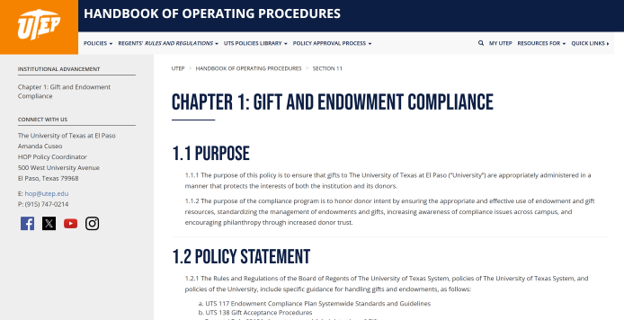
The University of Texas at El Paso (UTEP) has gone a step further with its formal policy by integrating its gift and endowment compliance policy into the institution’s handbook of operating procedures. Hilary Dudley, Associate Director, Gift Services and Compliance at UTEP, shared that “Having the fund management policies in our handbook is a great tool that we can point to in working with faculty, deans, fiscal managers, and other campus partners. It makes our conversations with them easier.” UTEP’s approach highlights how formalizing fund management policies can strengthen collaboration and help elevate the work from a back-office function to a shared institutional responsibility.
Imperative 3: Build Structured Training Initiatives for Key Internal Stakeholders
While raising awareness of fund management on campus is critical, it is important that these efforts be coupled with structured training initiatives for key internal stakeholders. Roundtable participants highlighted how training efforts at most institutions are often ad hoc and fragmented, with 50% of attendees reporting that they struggle to educate others on campus about the importance of fund management. While some institutions include fund management information in onboarding programs for new deans or development officers, many rely on informal conversations or on-demand training. This reactive and piecemeal approach ultimately places the burden on fund managers, faculty members, and business officers to seek out answers when they need assistance, which is less than ideal.
As institutions work to move beyond a reactive approach, roundtable participants and interviewees highlighted several practical ways to strengthen training and support for key stakeholders. Three strategies emerged as best practices:
- Annual required compliance training
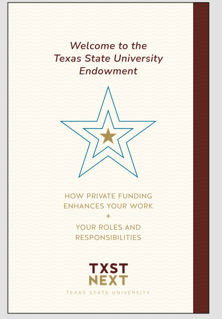
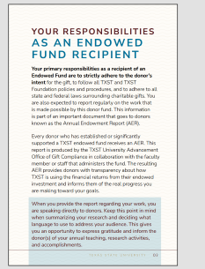
- A "welcome to the endowment" guide for internal stakeholders
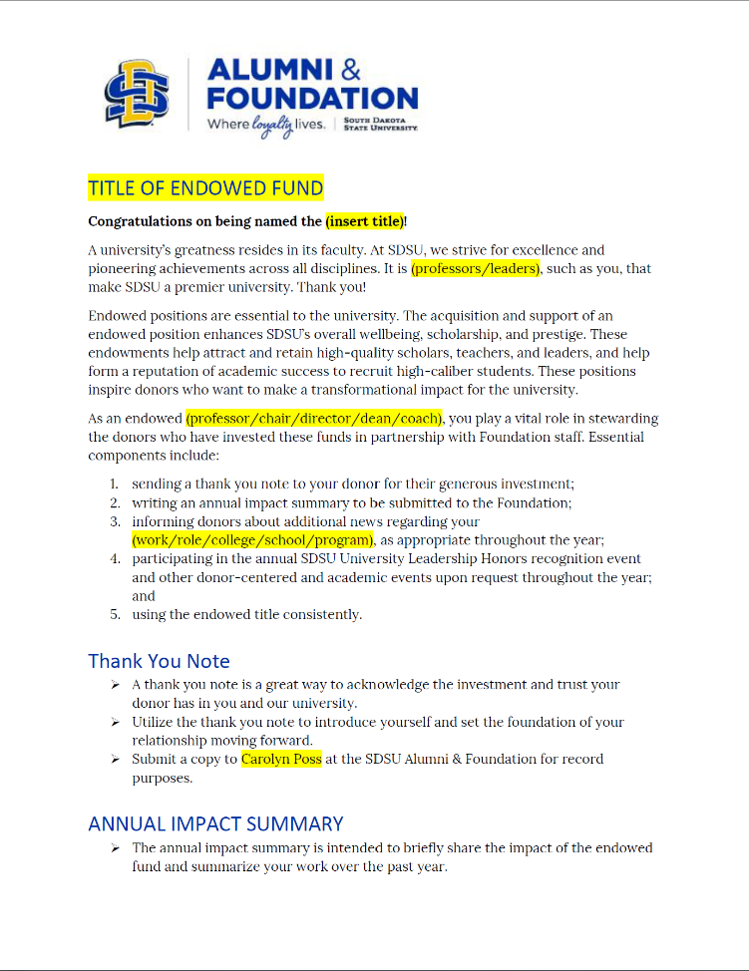
- Targeted resource packets for endowed positions
Together, these strategies establish a stronger foundation for compliance, reduce confusion, and enhance stewardship initiatives across campus.
Imperative 4: Strengthen Buy-In and Accountability Among Senior Institutional Leaders
Traditionally, fund management has been viewed primarily as an operational responsibility, and oversight for it usually falls to individuals at the director level. For example, FundMiner’s 2025 Annual Benchmarking Survey found that nearly 50% of respondents identified a senior director as the person most directly responsible for this work at their organization. In an environment marked by financial constraints, growing public scrutiny, and donor retention challenges, fund management increasingly must be viewed as a university-wide strategic priority. For many institutions, making that shift begins with clearly articulating the value of effective fund management.
Building that case requires demonstrating return on investment, which both roundtable attendees and interviewees emphasized as critical to driving institutional buy-in. As a result, practitioners and advancement leaders must work together to demonstrate that fund management is more than a day-to-day operational function. For example, Amber Alexander, Executive Director of Donor Relations and Campaign at Lehigh University, described how they are
“taking examples of unspent funds and are shining a bright light on them for leaders to help them understand this is an institutional responsibility. We highlighted how these are systematic issues and it impacts the strategic growth of our division at a time when increasingly philanthropy is critical in higher education.”
Practitioners also shared that framing fund management work in terms of enterprise risk management and resource constraints helped gain mindshare among institutional leaders.
Making the case for investment, however, is only part of the challenge. In an era of increased turnover among provosts, deans, and other academic leaders, shifting priorities can dilute urgency and weaken accountability for fund management practices. As a result, institutions must continually reinforce the long-term value of fund management and keep senior leaders focused on its broader strategic implications. Aaron Rouse, Senior Director of Funds Management and Stewardship at the University of Nebraska Foundation, emphasized how “The work we are doing [in fund management] is helping donors advance their philanthropic mission and see their impact. And ultimately, this will help us raise more money for the institution.” Even as leadership changes reshape institutional priorities, fund management must remain grounded in a long-term perspective. Sustained investment in this work strengthens stewardship today and positions institutions for greater philanthropic impact in the future.
How CASE Can Support Fund Management Work Moving Forward
One of the drivers behind this two-year research initiative was to explore synergies between emerging CASE member needs and Educational Partners. As part of this work, both roundtable participants and interviewees shared ideas on how CASE can effectively support fund management work moving forward. Their feedback centered on the five recommendations below.
Create Industry-Wide Definitions and Identify Best Practice
As many institutions are only in the beginning stages of this work, the top recommendation is for CASE to assist in crafting industry-wide definitions to guide fund management. Common wish list items ranged from defining what constitutes unspent funds to drilling down into the specific criteria for troubled funds and outlining the acceptable annual percentage of unspent funds across an institution. Practitioners frequently emphasized how having CASE, as a respected third party, provide guidance on these issues would be incredibly useful in conversations with senior university leaders, demonstrating that it is not just one or two lone voices advocating for these issues internally.
While common definitions remain the highest priority, there is also considerable interest in having CASE spotlight best practices because right now “It is hard to say who is a leader in this field [but CASE] can identify and spotlight these practitioners.” Finally, while the idea of including fund management in a future version of CASE Global Standards resonated early in the research, practitioners are increasingly more interested in shared definitions and different approaches to measurement that can be adapted to their institutions. Aaron Rouse, Senior Director of Funds Management and Stewardship at the University of Nebraska Foundation, shared how his perspective continues to evolve: “I go back and forth on true standards. Increasingly, I think we need standards with a small s or guidelines around here is what you should measure and here are some ways you can define it.”
Develop an Easily Accessible Library of Templates and Resources
The next recommendation focuses on addressing the current lack of templates and resources in this space. Because many fund management professionals are teams of one, they often find themselves recreating the wheel or spending significant time searching online for resources that fit their specific institutional context. During the roundtables, for example, one practitioner who was new to the role noted, “I have been searching for really solid examples of good fund management processes and procedures. I can’t find good sources and can’t find anything with the right level of detail.”
There is an opportunity for CASE to build a dedicated subject library for fund management resources where professionals can share items, such as reinvestment policies or sample endowed reports. Katie Camm, Senior Director of Stewardship at the University at Buffalo, emphasized, “We are happy to share all our materials. We love it when other schools are open to sharing information. We aren’t competing against each other; rather we have a nice opportunity to learn from each other.”
To contribute a sample for the CASE Library Sample Collections, please email [email protected].
Design Community Building Opportunities for Fund Management Practitioners
The third recommendation centers on the isolation many fund management practitioners experience in their roles and daily tasks. While their work is interdisciplinary in nature and involves interactions with many campus partners, they rarely have internal colleagues with similar subject matter expertise with whom they can exchange ideas and brainstorm. Both the roundtable participants and interviewees underscored a strong desire to build connections and network with others doing fund management work at different institutions.
While several interviewees praised the great work FundMiner has done in bringing professionals together through its annual conference and master classes, they emphasized that there is still a role for CASE to play in creating a more permanent space for people to connect. For example, one way CASE could foster these connections would be to create an online community similar to its existing groups for alumni relations, advancement services, and community colleges. By creating spaces for ongoing collaboration, CASE has an opportunity to help practitioners learn from one another and develop stronger practices over time.
CASE recently launched an online community for discussions around fund management, open to CASE members.
Integrate More Fund Management Content into CASE Events
Because multiple functions, including advancement services and development, play a critical role in fund management work, there is interest in seeing it more fully integrated into additional CASE programming. Jennifer Riordan, Executive Director of Donor Relations at The George Washington University, emphasized how “I don’t think we need a dedicated CASE fund management conference yet, but it would be good to have this content at regional conferences and other groups. I was just at a District conference and there weren’t any fund management presentations being offered. It would be good to have this content included there and especially getting it in front of development officers.” This perspective was echoed by others who emphasized the need for greater visibility of fund management work across existing CASE events, including DRIVE, Summit, and Development for Deans and Academic Leaders. Expanding content across these venues would help raise awareness of the field while also connecting fund management work more directly to the priorities of other advancement professionals and academic leaders.
Help CAOs Position Fund Management as an Institutional Strategic Priority
The final recommendation focuses on the need for CASE to help chief advancement officers raise the visibility and priority of fund management work at the institutional level. Several interviewees highlighted an emerging opportunity for CASE to guide strategic conversations about fund management in terms of roles, expectations, and institutional approaches. Sarah Sims, Vice of University Advancement at the University of North Texas at Dallas, advocated that CASE needs to be the voice of this topic at the leadership level, noting:
“Gift stewardship is not just a checklist. It needs a coordinated institutional approach. This is not just day-to-day technical and financial tasks. This is a leadership responsibility, and the work goes well beyond advancement. CASE is positioned to provide coaching for Advancement leaders who are operating in an environment where donor trust, fund governance, and institutional transparency face unprecedented pressure. Institutions fail because they can’t get everyone with vested interests to the table.”
Potential opportunities for CASE could include developing special talking points for presidents and university cabinets, joint working sessions with chief advancement officers, deans, and finance leaders, and guides for facilitating strategic institution-wide conversations.
Acknowledgements
Special thanks to the interview and roundtable participants whose generosity in sharing their time, experiences, and expertise helped shape this project.
2026 Interview Participants | |
Amber Alexander Executive Director of Donor Relations and Campaign Lehigh University Katie Camm Senior Director of Stewardship Lasserina Dowell Former Senior Fund Manager and Compliance Analyst The Ohio State University Delma Garcia Senior Director of Gift Policy Administration and Donor/Fund Stewardship University of California, San Diego Josh Greenbaum Executive Director of Gift Operations | Carolyn Poss Vice President for Philanthropic Fulfillment South Dakota State University Alumni & Foundation Jennifer Riordan Executive Director of Donor Relations The George Washington University Aaron Rouse Senior Director of Funds Management and Stewardship University of Nebraska Foundation Sarah Sims, CFRE Vice President of University Advancement University of North Texas at Dallas |
2024 Roundtable Participating Institutions | |
ASU Enterprise Partners (ASU Foundation) Cardiff University Central Michigan University Colorado School of Mines Foundation Emma Willard School Emory University Fort Lewis College Foundation Heidelberg University Lehigh University Loughborough University Miami University Northeastern University Oregon Health & Science University Foundation Sam Houston State University San Diego State University South Dakota State University Alumni & Foundation St. Edward's University St. Mary’s College of Maryland Foundation Stephen F Austin State University Texas State University | The George Washington University The Ohio State University The University of Texas at El Paso Thomas Jefferson University and Jefferson Health Trinity University U.S. Naval Academy Alumni Association and Foundation UMass Amherst Foundation University at Buffalo University of Auckland Foundation University of California, San Diego University of Cincinnati Foundation University of Colorado Boulder University of Colorado Foundation University of Nevada, Las Vegas University of Texas at Austin University of Wisconsin Stevens Point |
Notes
i Philanthropy Roundtable, ‘Seven Stories of Donor Intent Violations in Higher Education Giving’ (2021), https://www.philanthropyroundtable.org/resource/seven-stories-of-donor-intent-violations-in-higher-education-giving/
ii Ali, Haider, ‘The Governance Imperative of Fund Stewardship: A Potential Blind Spot in Higher Education’ (2026), https://agb.org/blog-post/the-governance-imperative-of-fund-stewardship-a-potential-blind-spot-in-higher-education/
iii Best Colleges, 'Tracking College Closures and Mergers', https://www.bestcolleges.com/research/closed-colleges-list-statistics-major-closures/
iv Independent Sector, ‘Trust in Civil Society: Headwinds and opportunities for American nonprofits and foundations’ (2023), https://independentsector.org/wp-content/uploads/2022/05/Independent-Sector-Trust-Report-2023.pdf
v FundMiner Annual Benchmarking Survey. https://hub.fundminer.com/global-benchmarking-survey-fund-management-and-strewardship
vi Lasserina worked in the fund management consultant role from 2023 to early 2026 before leaving the institution. The views shared here are her own and do not represent an official position, policy, or endorsement of The Ohio State University.
vii UTEP Gift and Endowment Compliance Training, https://minetracker.utep.edu/event/11299681 and https://compliance.utep.edu/training/PowerPointSlides/20020.pdf
viii This interview with Sarah was conducted in March 2026 before she left TXST to transition into a new role in May 2026.
Author
Dr. Liz Rothenberg, Rothenberg Research (independent consultant)
Contributors
Nicholas Campisi, Ph.D., Director, Data Science, CASE
Chelsea Lamego, Co-Founder and CEO, FundMiner
Haider Ali, Head of Strategic Partnerships & Marketing, FundMiner